
Introduction
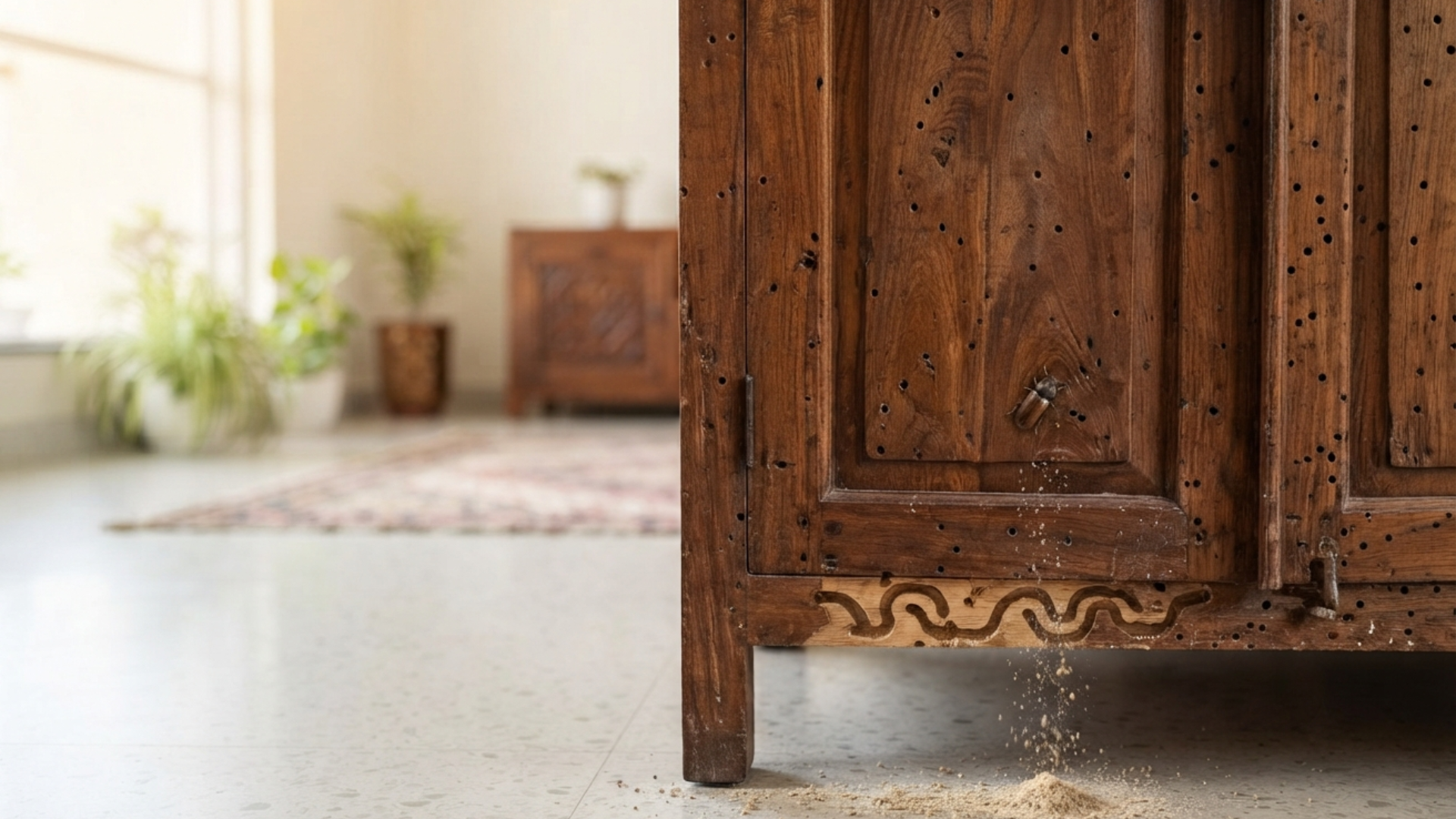
Wooden furniture, doors, cabinets, flooring and other timber structures can develop hidden pest problems that are difficult to notice in the early stages. One such problem is a wood borer infestation, where wood-boring insects damage timber from inside and may gradually weaken the material. Understanding the early signs of wood borer activity, why infestations occur and how professional treatment works can help homeowners and businesses address the problem before the damage becomes extensive.
What Are Wood Borers?
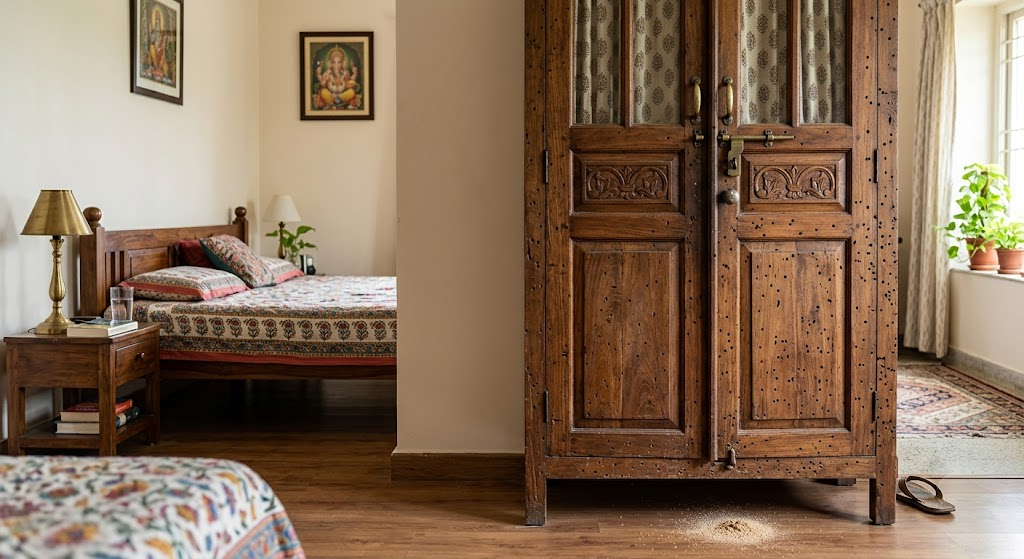
Wood borers are insects whose larvae feed inside wood. Depending on the species, they can attack different types of timber, wooden furniture and structural components. The adult insect may not be the main source of damage. In many cases, the larvae remain inside the wood and create tunnels as they feed and develop. This makes an infestation difficult to identify simply by looking at the surface. Some infestations may remain unnoticed for a long period before visible signs appear.
7 Common Signs of Wood Borer Infestation
Identifying an infestation early can help reduce the extent of wood damage. Look for the following warning signs.
1. Small Holes in Wooden Surfaces
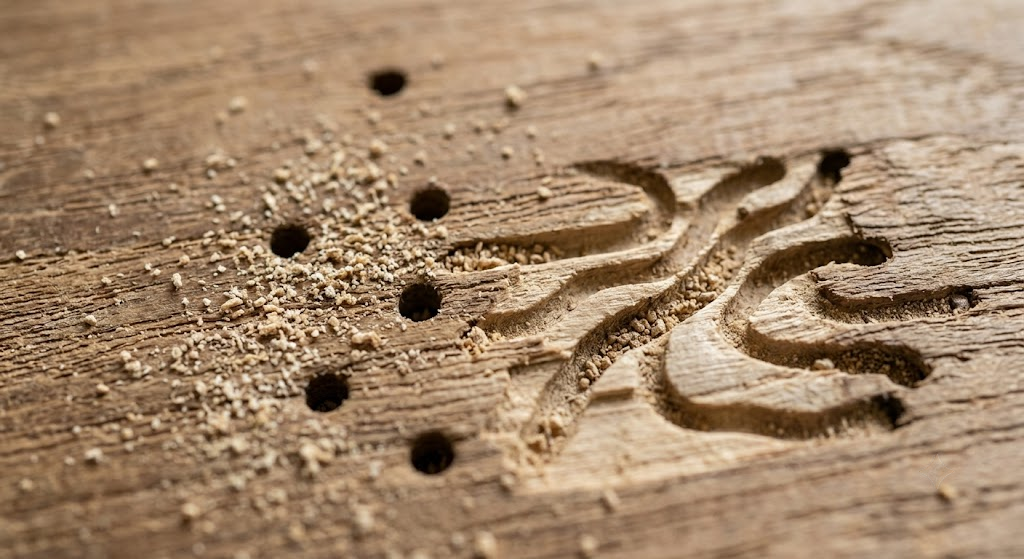
- Small, round exit holes on furniture, doors, wooden panels or other timber surfaces can indicate wood-boring insect activity.
- A few isolated holes may not always confirm an active infestation, so other signs should also be checked.
2. Fine Wood Dust or Frass
- Fine powder or sawdust-like material underneath or around wooden furniture can be an important warning sign.
- This material may come from insect activity inside the timber and should not be ignored when it repeatedly appears after cleaning.
3. Tunnels Inside the Wood
- Wood-boring larvae can create galleries or tunnels inside timber as they feed.
- The external surface may initially look normal even though the interior has already been affected.
4. Weak or Damaged Wood
- Advanced infestation can affect the strength and integrity of wooden components.
- Furniture, wooden frames, panels and other timber materials may become weaker when internal damage continues over time.
5. Repeated Appearance of Wood Powder
- If wood powder keeps appearing after the surrounding area has been cleaned, it is worth investigating the source rather than treating the powder itself as the problem.
- Repeated deposits can indicate continuing insect activity.
6. Adult Insects Near Wooden Materials
- Finding adult wood-boring insects around affected timber can be another indication of an infestation.
- However, identifying the exact pest species is important because different insects can require different treatment approaches.
7. Damage Around Wooden Joints and Edges
- Infestation may become noticeable around joints, edges, cracks and less frequently disturbed sections of wooden furniture.
- These areas should be included during a professional inspection.
What Causes Wood Borer Infestation?
Wood borers can become a problem when susceptible timber provides suitable conditions for development. Several factors may contribute to the risk.
Moisture in Wooden Materials
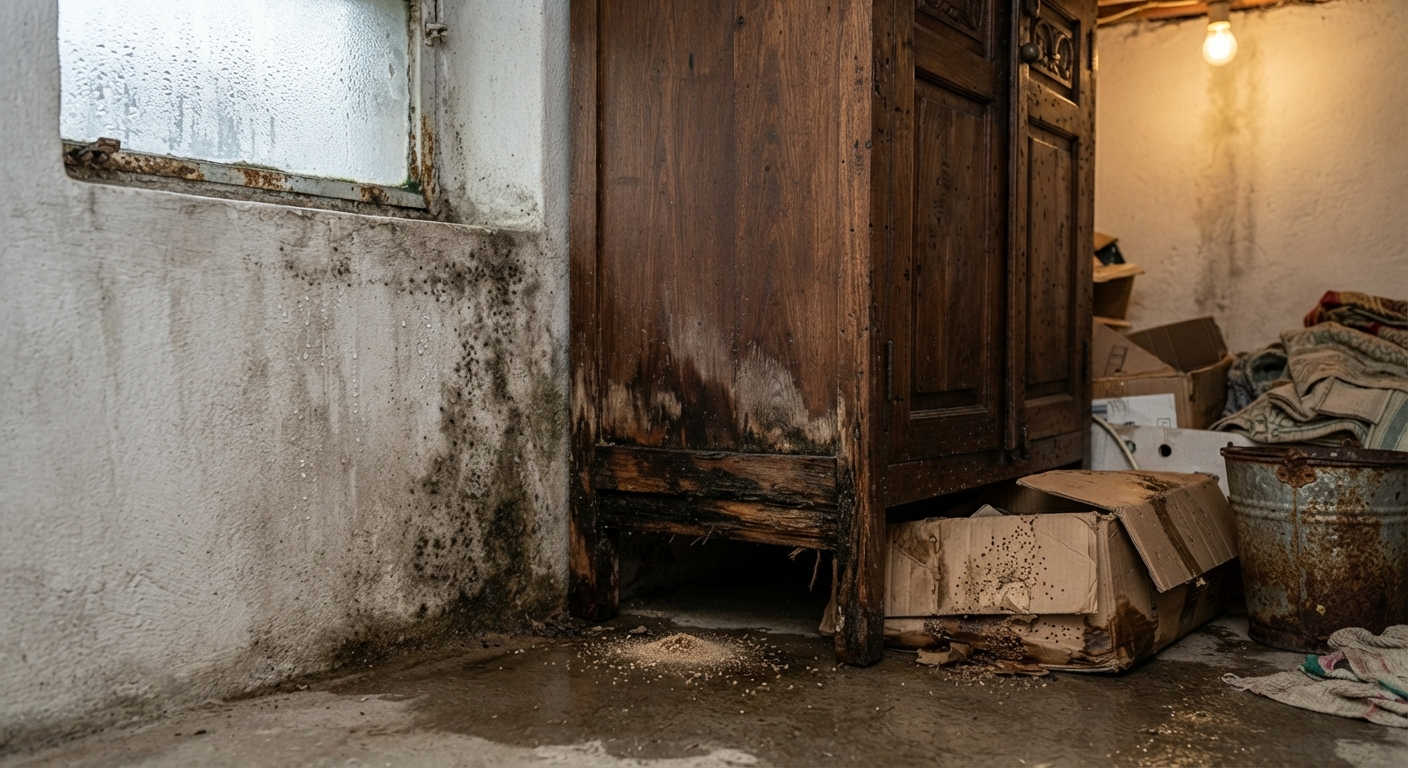
Excess moisture can affect timber and create conditions that may support certain wood-boring insects. Water leakage, damp areas and poor ventilation around wooden materials should therefore be addressed.
Untreated or Vulnerable Timber
Some types of untreated or inadequately protected wood can be more vulnerable to insect attack. Proper timber treatment and maintenance can help reduce pest-related risks.
Introduction Through Infested Furniture or Timber
Infested furniture, timber, wooden packaging or other wood materials can potentially introduce wood-boring insects into a property. This is why second-hand wooden furniture and newly purchased timber should be inspected when there are signs of infestation.
Poor Ventilation
Areas with inadequate airflow can contribute to moisture-related problems around wooden materials. Maintaining appropriate ventilation can support better timber protection.
Where Can Wood Borers Be Found?
Wood-boring insects can affect different wooden materials depending on the species and environmental conditions.
Common areas that may require inspection include:
- Wooden furniture
- Wardrobes and cabinets
- Doors and door frames
- Wooden windows
- Flooring
- Wooden ceiling components
- Timber panels
- Wooden storage structures
- Other exposed or concealed timber
Regular inspection is particularly important when wooden materials show unexplained holes, powder or structural deterioration.
Wood Borer vs Termite: What Is the Difference?
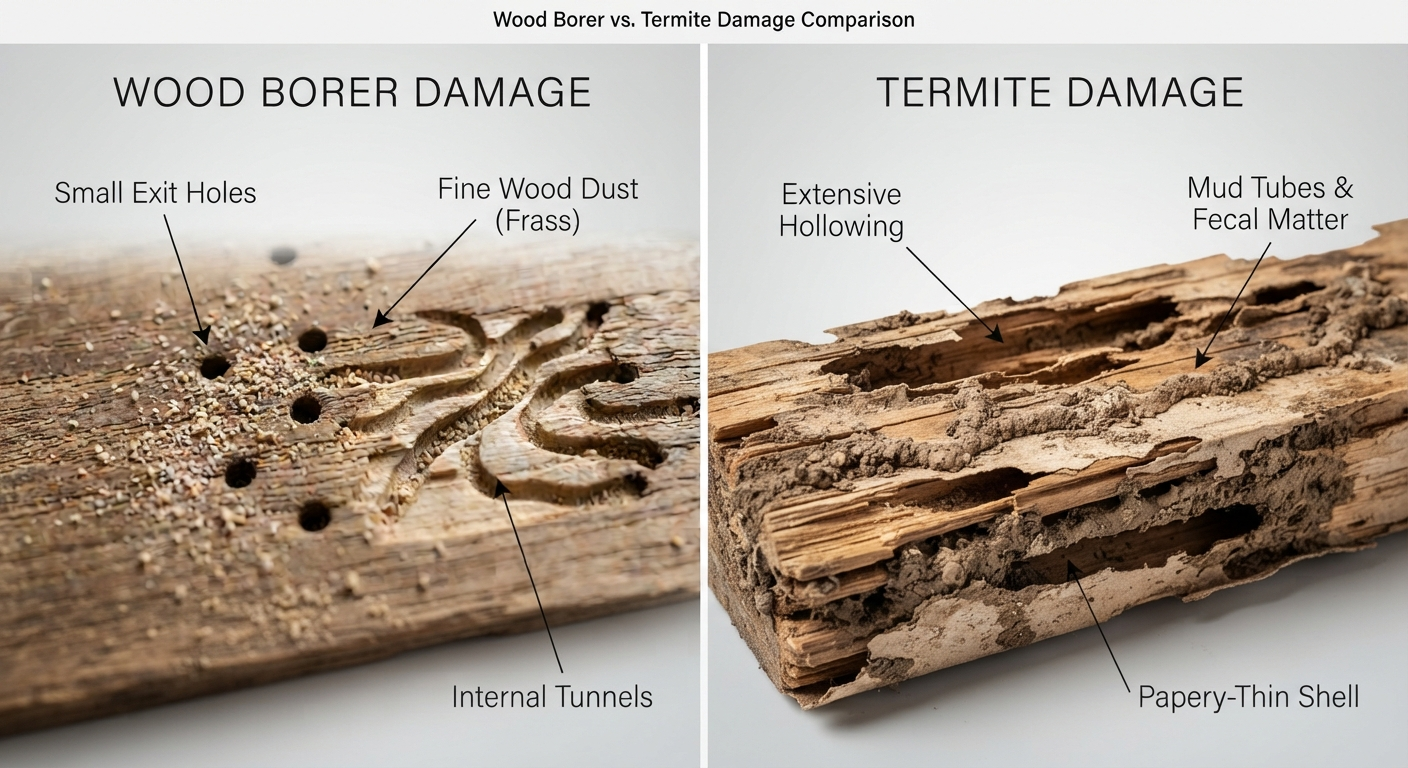
Wood borers and termites can both damage wood, but they are different pest problems. Wood-boring insects generally create tunnels inside timber during their development, while termites are social insects that live in colonies and can attack various wooden components. Visible holes and wood powder can point towards wood-borer activity, whereas termites may produce different evidence depending on the species and infestation location. Because different pests require different treatment strategies, identifying the actual cause of the damage is important before selecting a treatment.
How Does Wood Borer Damage Affect Furniture?
A wood-borer infestation may initially appear to be a cosmetic problem because the first visible signs can be small holes or powder. However, continued internal activity can gradually affect the condition of the timber.
Potential problems include:
- Surface deterioration
- Internal tunnelling
- Weakening of wooden components
- Damage to furniture
- Reduced durability of timber
- Increased repair or replacement requirements
The extent of damage depends on factors such as the insect species, type of timber, duration of infestation and environmental conditions.
Can You Prevent Wood Borer Infestation?
Prevention starts with reducing conditions that can make wooden materials more vulnerable.
Keep Wooden Areas Dry
Repair plumbing leaks, roof leaks and other moisture sources that affect wooden structures.
Maintain Good Ventilation
Ensure that rooms, storage areas and enclosed spaces have adequate airflow.
Inspect New Wooden Furniture
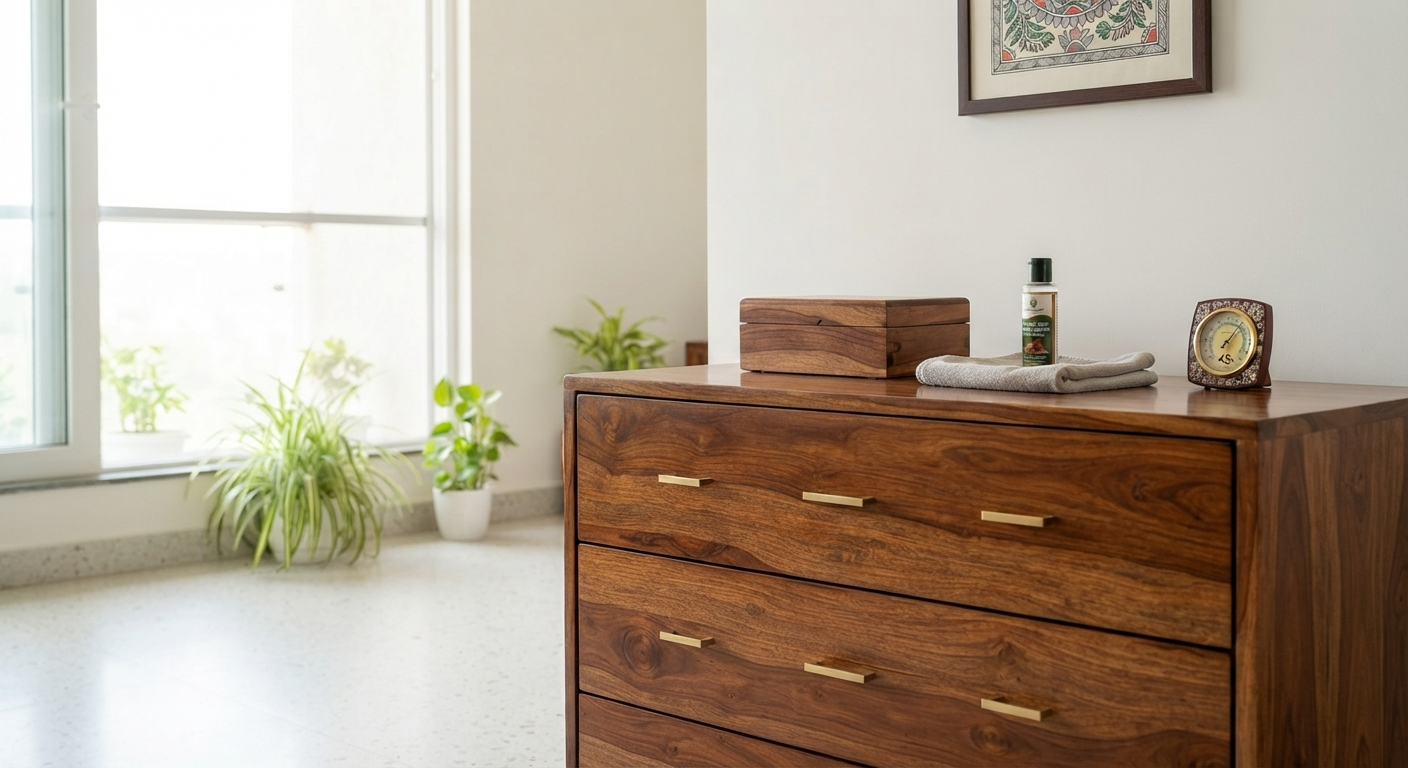
Check second-hand furniture and newly purchased timber for holes, powder or other unusual signs before bringing them into an existing property.
Maintain Wooden Surfaces
Regularly inspect furniture, doors, cabinets and timber structures for changes in appearance or condition.
Address Signs Early
If holes or wood powder repeatedly appear, investigate the cause instead of simply cleaning the affected area.
When Should You Contact a Professional?
Professional pest inspection can be useful when:
- Wood powder repeatedly appears
- New holes continue to develop
- Several wooden items show similar damage
- Furniture appears structurally weak
- The source of the infestation is unclear
- DIY treatment has not solved the problem
- The affected area is large or difficult to access
A professional can inspect the affected timber and surrounding areas to determine whether there is evidence of active infestation and recommend an appropriate treatment approach.
How Professional Wood Borer Control Works
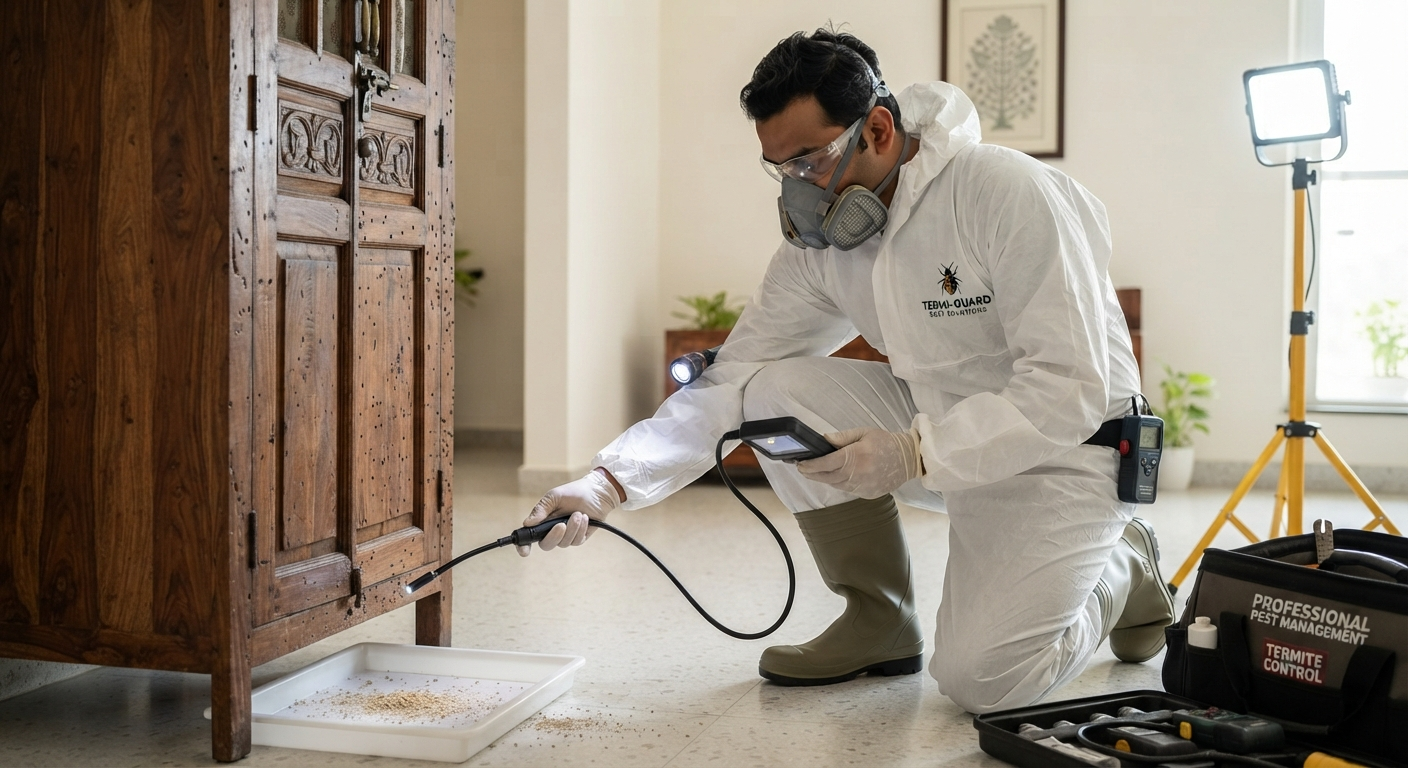
A professional wood borer control service generally begins with inspection rather than immediately applying treatment.
Step 1: Inspection
The affected wooden materials and surrounding areas are examined for visible holes, powder, tunnels, damage and other signs of pest activity.
Step 2: Pest Identification
The pest problem is assessed to determine whether the signs are consistent with wood-boring insects or another type of wood-damaging pest.
Step 3: Treatment Planning
The treatment approach is selected according to the affected material, infestation level, accessibility and property conditions.
Step 4: Targeted Treatment
Appropriate professional pest-control methods are applied to the affected areas.
Step 5: Follow-Up and Prevention
Where necessary, the treated area can be monitored and additional recommendations can be provided to reduce the possibility of recurring problems.
Why Professional Wood Borer Treatment Matters
Wood-borer activity can occur inside timber, which means treating only the visible surface may not address the underlying problem. Professional inspection helps identify affected areas and determine the appropriate treatment strategy. For valuable furniture, large wooden structures or widespread infestations, professional assessment can also help determine whether the timber can be treated, repaired or requires further attention.
Wood Borer Control for Homes and Businesses
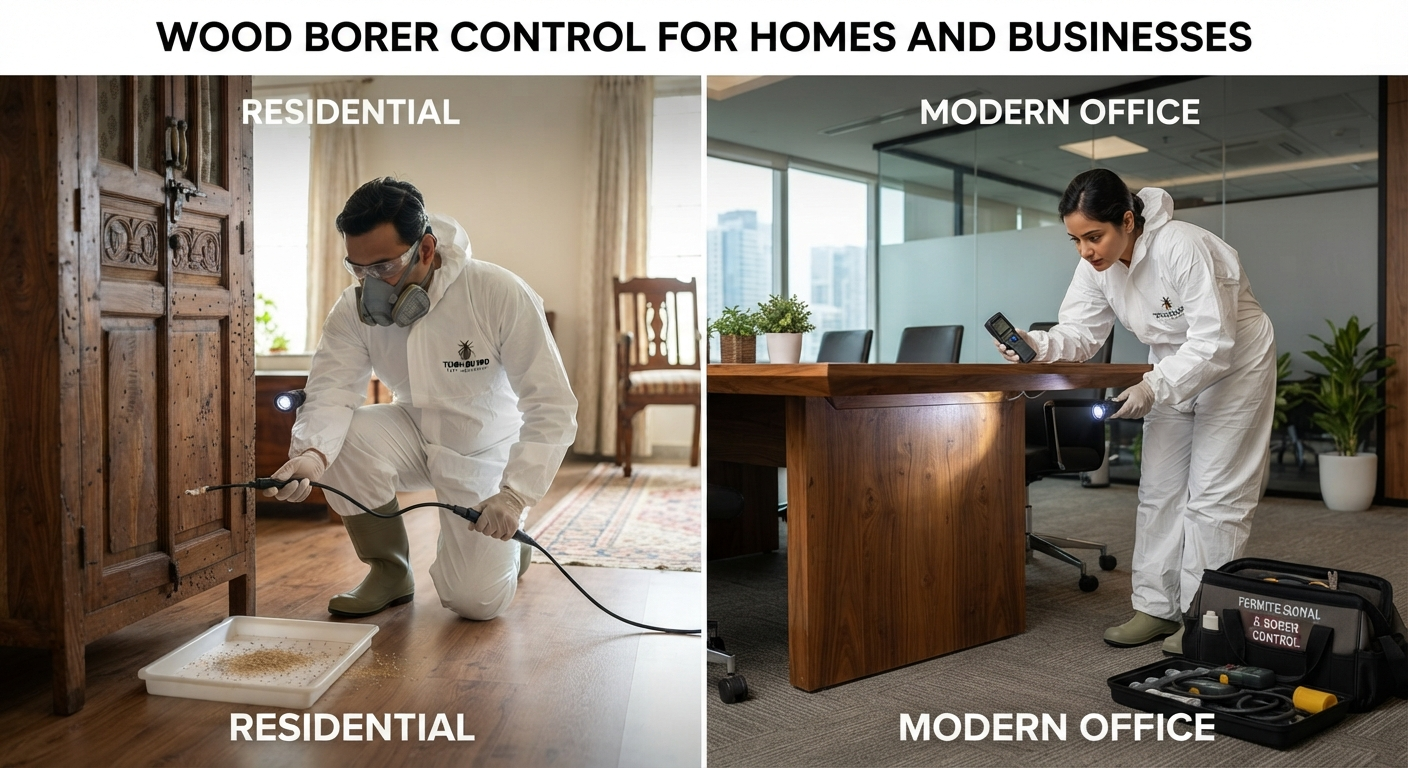
Wood-borer problems are not limited to residential properties. Businesses with extensive wooden furniture, storage structures, offices, commercial interiors or timber components may also need regular inspection. Early detection can help businesses identify pest activity before it develops into a larger maintenance problem. For commercial properties, pest management can be incorporated into a broader preventive pest-control programme based on the property’s specific requirements.
Frequently Asked Questions
How do I know if I have wood borers?
Small holes, repeated appearance of fine wood powder, internal wood damage and the presence of adult wood-boring insects can be warning signs. A professional inspection may be needed to confirm active infestation.
Can wood borers damage furniture?
Yes. Wood-boring insects can create tunnels inside timber and may gradually affect wooden furniture depending on the species and level of infestation.
Is wood borer damage the same as termite damage?
No. Wood borers and termites are different pests and their behaviour and damage patterns can differ. Correct identification is important before selecting a treatment.
Can wood borer infestation be prevented?
Regular inspection, moisture control, proper timber maintenance, ventilation and early attention to warning signs can help reduce the risk.
Does every hole in wood mean wood borers are present?
Not necessarily. Old insect damage, mechanical damage and other causes can also create holes. Repeated wood powder and other evidence should be assessed before concluding that there is an active infestation.
When should I get professional wood borer treatment?
If holes continue to appear, wood powder repeatedly accumulates, multiple wooden items are affected or the damage is extensive, professional inspection is recommended.
Conclusion
Wood borer infestations can remain hidden inside timber until visible damage becomes noticeable. Recognising early signs such as small holes, wood powder and unexplained deterioration can help property owners investigate the problem sooner.
If you suspect wood-boring insect activity in your home, office or commercial property, professional inspection can help identify the cause and determine a suitable control approach.
Looking for professional wood borer control? Contact HVL Pest Services to discuss your pest-control requirements and arrange an inspection.