Introduction
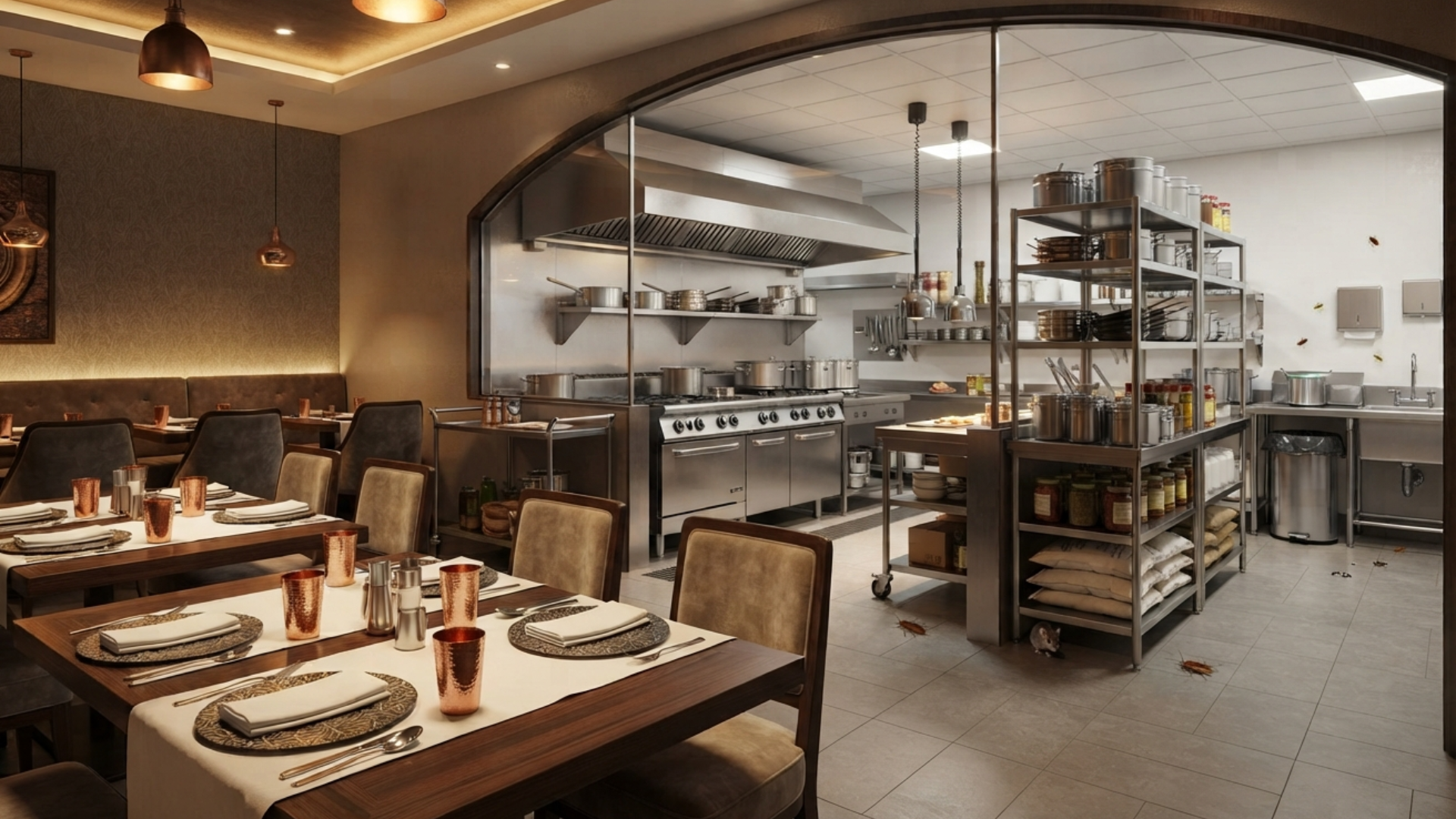
Restaurants handle food, ingredients, packaging and waste every day, making them vulnerable to different types of pest activity. Cockroaches, rodents, flies, ants and stored-product pests can enter kitchens, storage areas, dining spaces and waste disposal zones when suitable preventive measures are not maintained. Effective pest control for restaurants is not only about treating pests after they appear. It also involves maintaining proper sanitation, protecting food products, identifying possible entry points and carrying out regular inspections. This guide explains the common pest risks faced by restaurants and practical ways to prevent pest problems in commercial food businesses.
Why Do Restaurants Attract Pests?
Restaurants provide several conditions that can attract pests, particularly when food residues, moisture or waste are easily accessible.
Constant Food Availability
Restaurants regularly store and prepare food, which can provide pests with access to ingredients, food particles and leftovers.
Even small amounts of food residue can become a potential food source for pests.
Moisture and Water Sources
Leaking taps, drains, sinks, condensation and damp areas can create favourable conditions for certain pests.
Areas around dishwashing stations and kitchen plumbing should therefore be inspected regularly.
Food Waste
Food waste and organic material can attract flies, cockroaches, rodents and other pests.
If waste is not removed and stored properly, pest activity can increase around kitchen and garbage areas.
Warm and Hidden Areas
Commercial kitchens contain equipment, cabinets, storage shelves and other areas where pests can hide.
Warm areas around kitchen equipment may also provide suitable shelter for some pests.

Common Pests Found in Restaurants
Different types of pests can affect restaurants depending on the building, location, food-handling practices and surrounding environment.
Cockroaches
Cockroaches are commonly associated with food preparation areas because they can find food particles, moisture and hiding spaces around kitchens and equipment.
They may hide in cracks, cabinets, drains and other concealed areas.
Rats and Mice
Rodents can enter restaurants through gaps around doors, pipes, drains, walls and other openings.
They may damage packaging, contaminate areas and create hygiene concerns.
Flies
Flies can be attracted to food waste, uncovered food, drains and garbage areas.
Poor waste management can increase the risk of fly activity around food-service areas.
Ants
Ants may enter restaurants while searching for food and water.
They can travel through small gaps and may become noticeable around food preparation and storage areas.
Stored-Product Pests
Certain insects can infest stored grains, flour, cereals, spices and other dry food products.
Regular inspection of stored ingredients can help identify problems early.
7 Warning Signs of Pest Activity in Restaurants
Restaurant pest activity is not always immediately visible. Some signs may appear before employees actually see a pest.
1. Pest Droppings
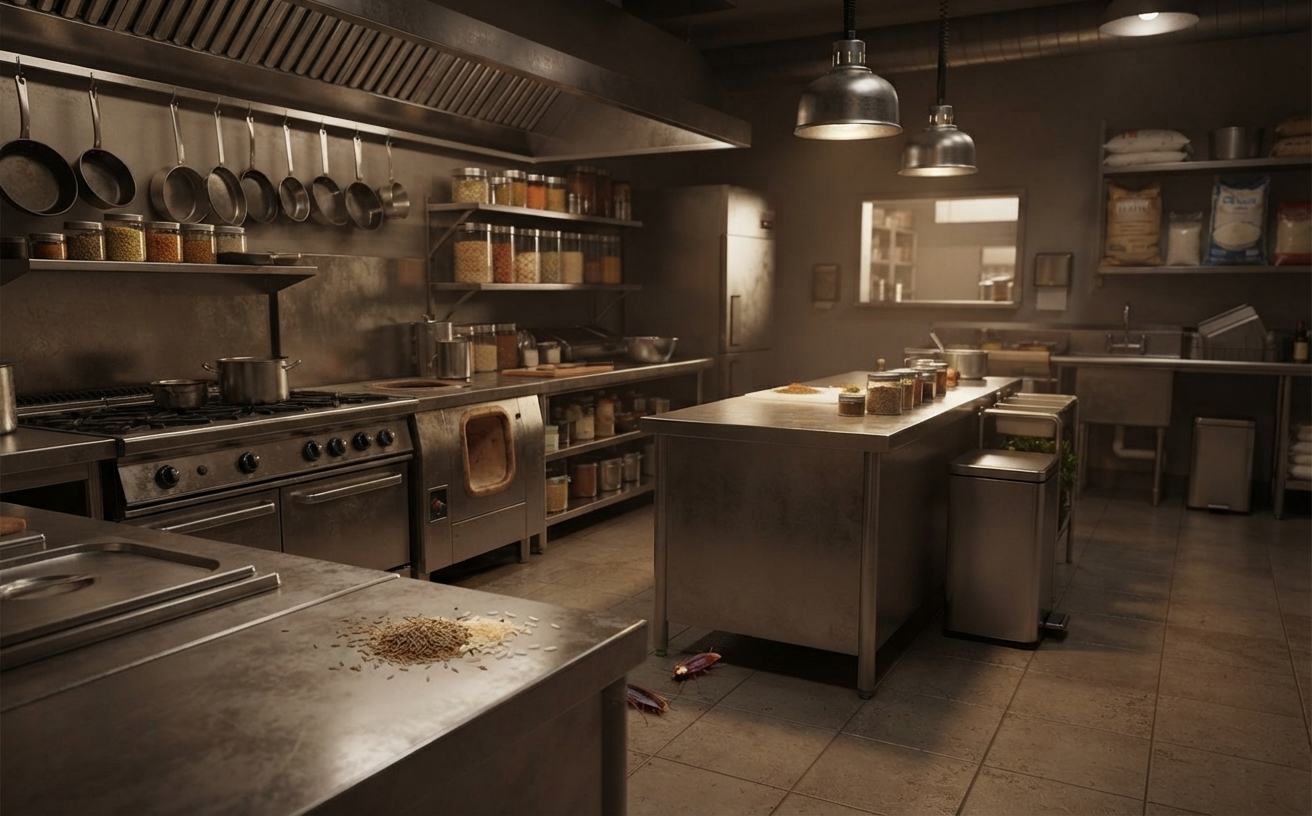
Small droppings around kitchen corners, storage areas, cabinets or other concealed locations can indicate pest activity.
The location and appearance of the droppings can help professionals investigate the type of pest involved.
2. Damaged Food Packaging
Holes, gnaw marks or damaged packaging can indicate possible rodent or insect activity.
Stored food products should be inspected regularly, especially when packaging damage is noticed.
3. Unusual Odours
Persistent unpleasant odours around cabinets, drains, storage areas or concealed spaces may indicate a pest or sanitation issue.
The affected area should be inspected rather than simply masking the smell.
4. Live or Dead Pests
Seeing cockroaches, rodents, flies or other pests inside a restaurant is an obvious warning sign.
Finding dead pests can also indicate activity that requires further investigation.
5. Eggs, Nests or Pest Debris
Some pests may leave behind egg cases, nesting materials, shed skins or other debris.
These signs may be found in hidden areas such as behind equipment, inside cabinets or around storage spaces.
6. Scratching or Movement Sounds
Scratching, gnawing or movement sounds from walls, ceilings, storage areas or behind equipment may indicate rodent activity.
These sounds should be investigated, especially when combined with other signs.
7. Increased Fly or Insect Activity
A sudden increase in flies or other insects around food preparation areas, drains or waste zones can indicate an underlying sanitation or pest issue.
How Pests Can Affect Restaurant Operations
Pest activity can create challenges for restaurants beyond the presence of insects or rodents.
Food Contamination Concerns
Pests can come into contact with food, food-contact surfaces, packaging and storage areas.
Maintaining proper hygiene and pest-prevention practices is therefore an important part of restaurant operations.
Damage to Food Packaging
Rodents and certain insects can damage packaging and stored ingredients.
Products with signs of contamination or damage may require separation and appropriate handling.
Damage to Property and Equipment
Rodents may gnaw on cables and other materials, while insects can hide inside equipment, cabinets and structural gaps.
Early inspection can help identify potential problems.
Business Disruption
Pest activity can require additional cleaning, inspection and corrective measures.
For restaurants, addressing pest risks proactively can help reduce the possibility of unexpected disruption.
Common Pest Entry Points in Restaurants
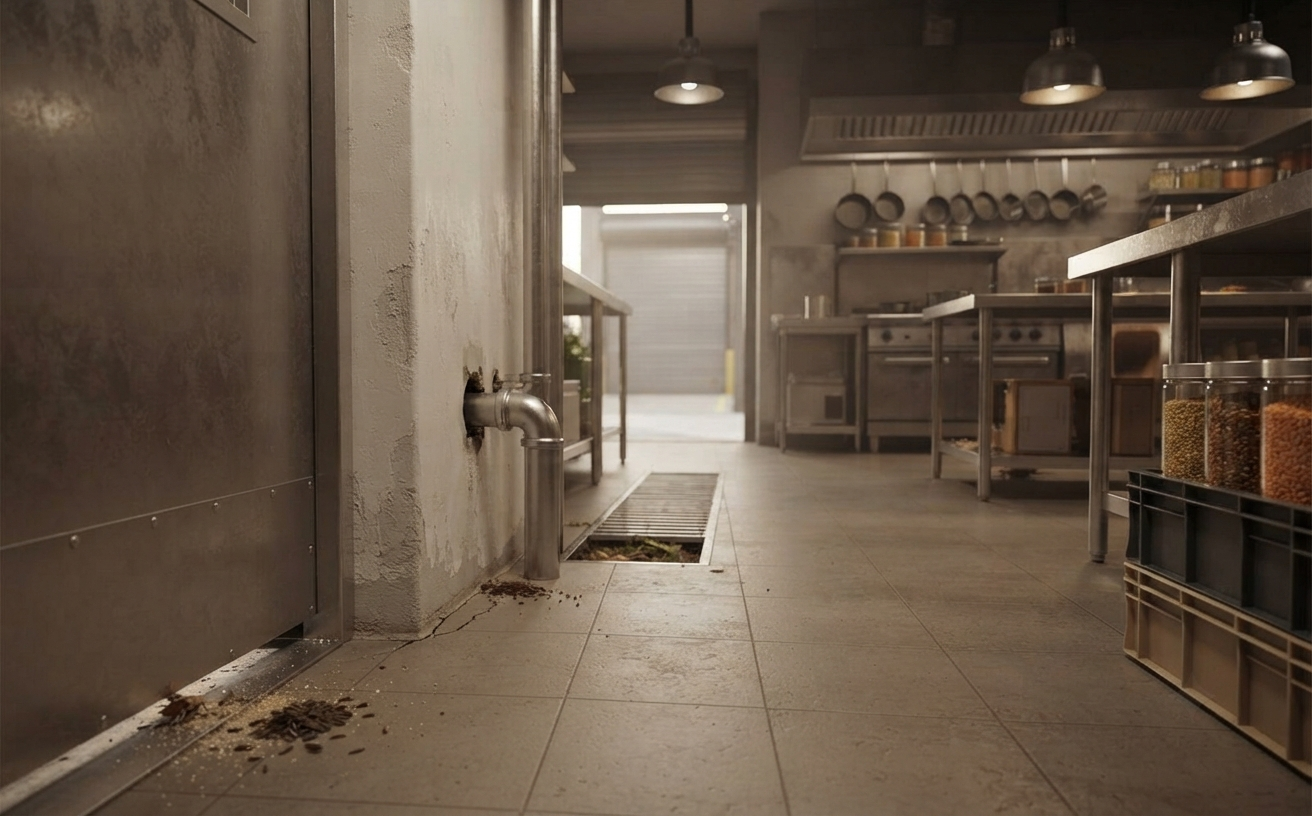
Pests can enter restaurants through several structural and operational access points.
Common areas to inspect include:
- Gaps beneath doors
- Damaged door seals
- Cracks in walls and flooring
- Open windows
- Drainage areas
- Gaps around pipes
- Utility openings
- Ventilation openings
- Delivery and loading areas
- Waste disposal zones
- Gaps behind kitchen equipment
How to Prevent Pests in Restaurants
Preventing pests requires consistent attention to sanitation, food storage, structural maintenance and monitoring.
1. Keep Food Properly Covered
Food and ingredients should be stored in suitable sealed containers whenever possible.
Avoid leaving exposed food unattended for long periods.
2. Clean Food Preparation Areas Regularly
Food preparation counters, floors and equipment should be cleaned according to the restaurant’s regular sanitation procedures.
Food particles should not be allowed to accumulate in hidden areas.
3. Remove Food Waste Promptly
Waste should be collected regularly and placed in suitable closed containers.
Garbage should not be allowed to accumulate near food preparation or storage areas.
4. Keep Floors and Drains Clean
Kitchen floors and drainage areas should be maintained regularly.
Food residues and standing water around drains can contribute to pest attraction.
5. Seal Cracks and Gaps
Potential pest entry points around doors, walls, pipes and utility lines should be identified and appropriately sealed.
6. Inspect Incoming Food Supplies
Food deliveries and ingredient packaging should be checked for damage, contamination or signs of pest activity before being moved into storage.
7. Maintain Organised Storage
Keep food products organised and avoid unnecessary clutter in storage areas.
Proper organisation makes cleaning and inspection easier.
8. Keep Doors and Windows Protected
Back doors and loading areas should not remain unnecessarily open.
Where appropriate, suitable screens, door seals or other preventive measures can help reduce pest entry opportunities.
9. Address Plumbing and Moisture Problems
Leaks around sinks, pipes and drains should be repaired promptly.
Reducing unnecessary moisture can help make the environment less attractive to pests.
10. Schedule Professional Pest Inspections
Regular professional inspections can help identify hidden activity and potential risk areas before they develop into larger problems.
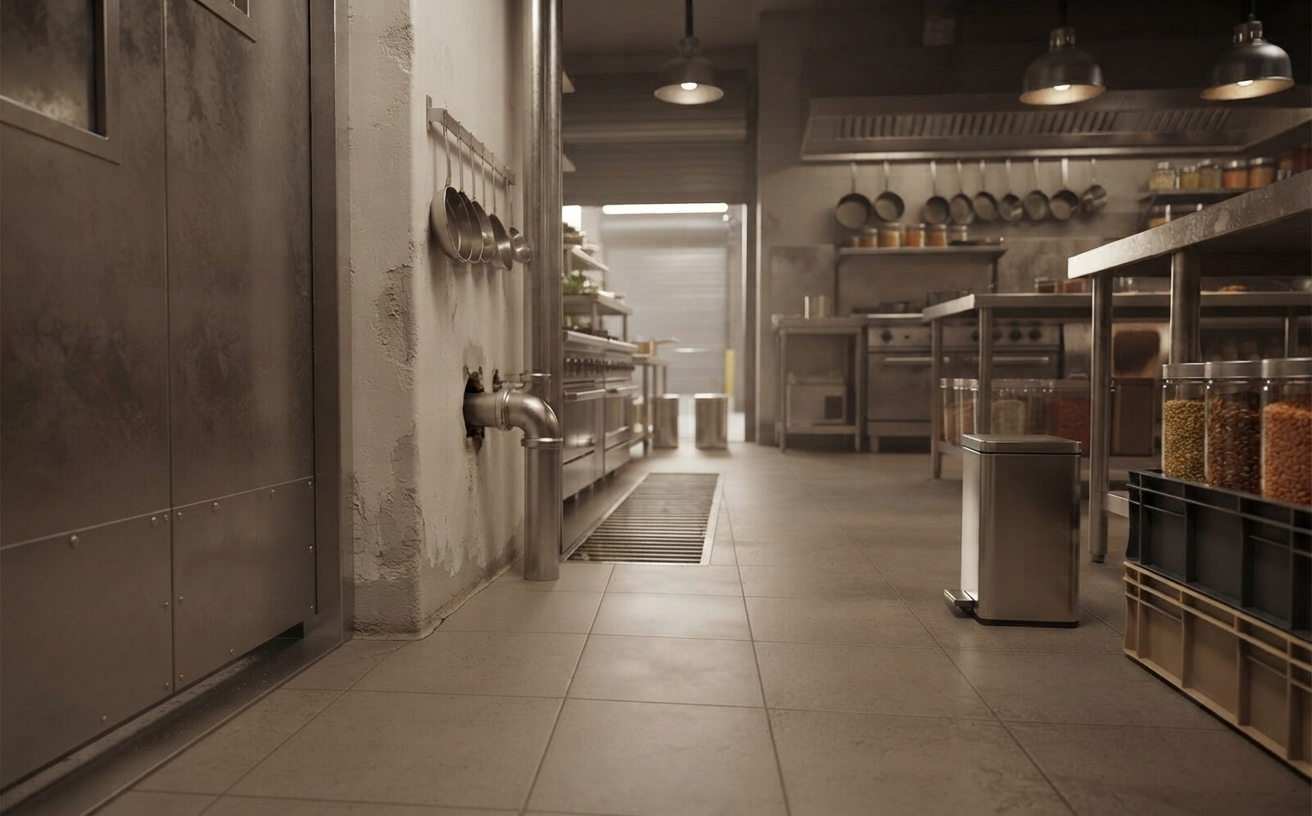
Restaurant Kitchen Pest Prevention
The kitchen is one of the most important areas to monitor because food preparation, cooking, washing and waste handling all take place there.
Keep Equipment Areas Clean
Food particles can accumulate underneath and behind cooking equipment if these areas are not cleaned regularly.
Where practical, equipment should be moved or inspected as part of scheduled deep-cleaning routines.
Check Drains Regularly
Drains can become areas of concern when food residue and organic material accumulate.
Regular cleaning and maintenance should form part of the restaurant’s sanitation procedures.
Inspect Cabinets and Storage Areas
Dark and less frequently accessed spaces can provide hiding places for pests.
Cabinets, shelves and storage corners should be included in regular cleaning and inspection routines.
Keep Food Preparation Areas Dry
Moisture around sinks, pipes and equipment should be addressed promptly.
A clean and dry kitchen can support a broader pest-prevention strategy.
Food Storage and Waste Management
Proper food storage and waste management are important components of pest control for restaurants.
Store Dry Ingredients Properly
Flour, rice, cereals, spices and other dry ingredients should be stored appropriately and checked regularly for signs of infestation.
Damaged or suspicious packaging should be separated and inspected.
Use Closed Waste Containers
Waste containers should remain closed where possible and emptied regularly.
Garbage should not be allowed to build up inside or immediately around the restaurant.
Clean Around Storage Areas
Spills underneath shelves, racks and storage containers should be cleaned promptly.
Regular cleaning also makes it easier to identify droppings, damaged packaging and other pest signs.
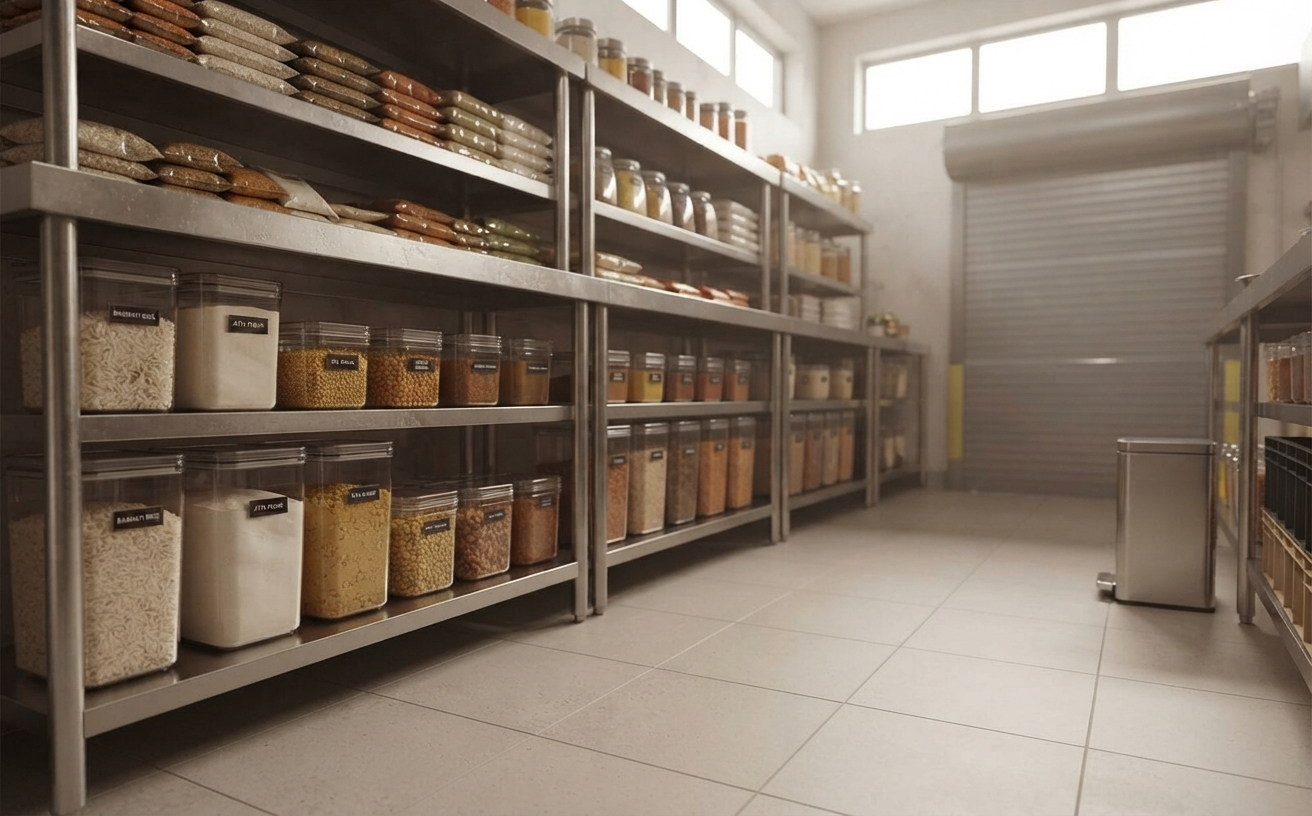
Why Regular Pest Inspections Matter
Restaurants operate continuously with food, deliveries, waste and water being handled every day.
Because of this, pest risks can change over time even when good cleaning practices are followed.
Regular inspections can help businesses:
- Identify early signs of pest activity
- Locate potential entry points
- Check kitchen and storage areas
- Monitor recurring pest problems
- Review sanitation-related risk areas
- Protect stored ingredients
- Plan suitable preventive measures
A regular inspection approach can help restaurants identify problems before they become more difficult to manage.
Professional Pest Control for Restaurants
Professional pest management can provide restaurants with a structured approach to identifying and controlling pest risks.
The exact treatment approach depends on the pest involved, the level of activity, the restaurant layout and the operational requirements of the business.
Step 1: Restaurant Inspection
A professional team can inspect kitchens, storage rooms, dining areas, waste zones, drains, loading areas and other vulnerable locations.
Step 2: Pest Identification
Identifying the pest involved is important because different pests may require different control and prevention approaches.
Step 3: Risk Assessment
Potential food sources, water sources, hiding areas and entry points can be assessed as part of the inspection.
Step 4: Treatment Planning
A suitable control plan can be developed based on the identified pest activity and the requirements of the restaurant.
Step 5: Follow-Up and Monitoring
Follow-up inspections and monitoring can help determine whether pest activity has reduced and whether additional preventive measures are required.
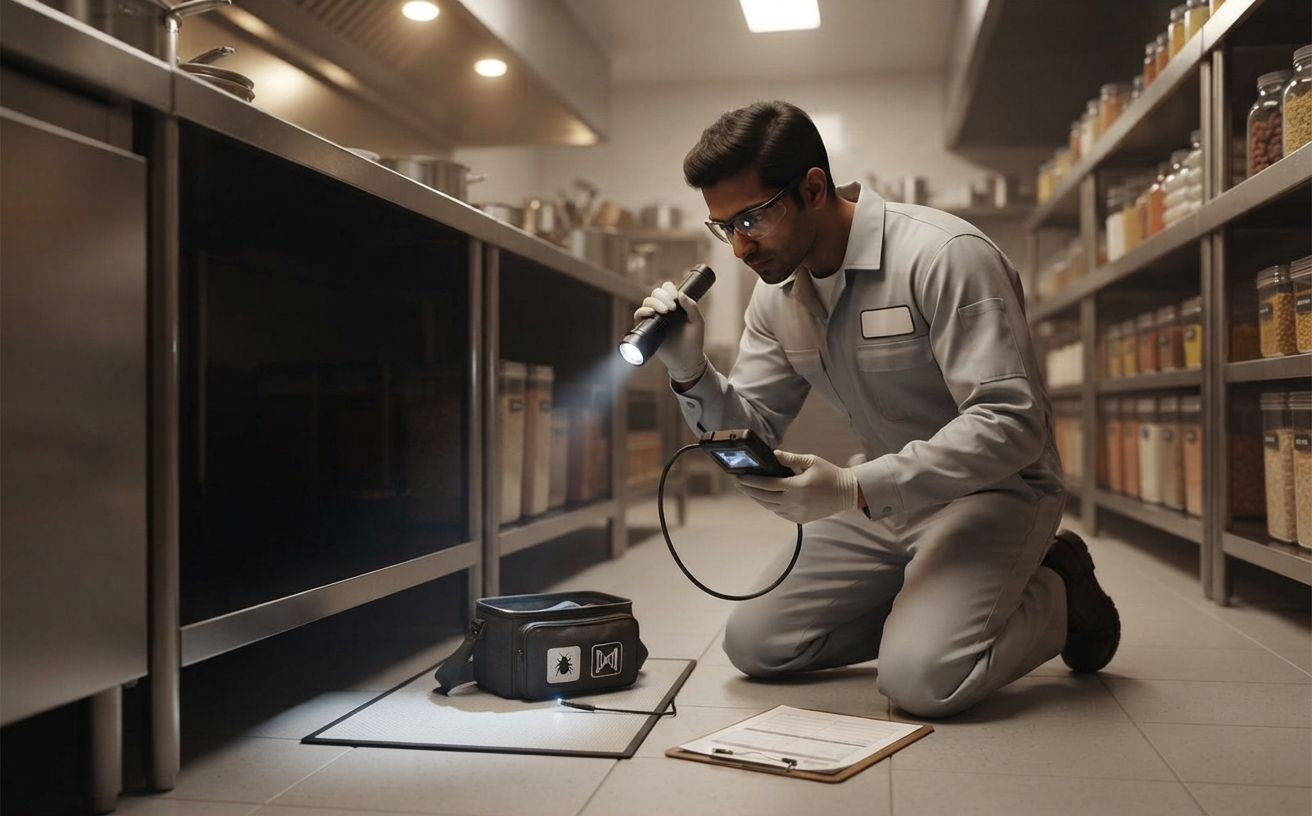
Pest Control for Food Businesses
Restaurants, cafés, bakeries, catering kitchens and other food-service businesses can face similar pest risks because they regularly handle food, ingredients, packaging and waste. A suitable pest control for food businesses approach should consider the entire premises rather than focusing only on areas where pests have already been seen.
Important areas include:
- Food preparation areas
- Dry storage rooms
- Refrigeration areas
- Dining areas
- Waste collection points
- Drains
- Loading and delivery areas
- Staff areas
- External surroundings
- Structural entry points
A complete inspection can help businesses understand where pest risks may be developing.
When Should a Restaurant Contact a Professional?
Restaurants should consider professional pest-control assistance when they notice repeated or increasing signs of pest activity.
Professional inspection may be appropriate when:
- Cockroaches are repeatedly seen
- Rodent droppings are found
- Food packaging is damaged
- Fly activity suddenly increases
- Pest activity continues after cleaning
- Unusual scratching sounds are heard
- Pests are found near food storage areas
- Pest activity is noticed during operating hours
- Previous pest-control measures have not solved the problem
- The source of the infestation is difficult to identify
Early professional assessment can help determine the pest involved and identify conditions contributing to the problem.
Frequently Asked Questions
Why do restaurants need pest control?
Restaurants handle food, ingredients, water and waste every day, creating conditions that can attract pests. Regular pest prevention and professional inspections can help businesses identify and manage these risks.
What are the most common pests found in restaurants?
Common restaurant pests can include cockroaches, rats, mice, flies, ants and certain stored-product pests. The exact pest risks depend on the restaurant environment and operating conditions.
How can I prevent cockroaches in my restaurant?
Keeping food preparation areas clean, removing waste regularly, reducing moisture, sealing gaps and inspecting hidden areas can help reduce cockroach risks. Professional inspection may be needed when activity continues.
Can rodents enter a restaurant through small gaps?
Yes. Rodents can use gaps around doors, walls, pipes, drains and utility openings as potential access points. Regular structural inspections can help identify and address these vulnerabilities.
Is regular cleaning enough to prevent restaurant pests?
Cleaning and sanitation are important, but they may not address structural entry points or an existing infestation. Professional pest inspection can help identify additional factors contributing to pest activity.
How often should restaurants have pest inspections?
The appropriate frequency depends on factors such as the type of food business, building conditions, pest risks and previous activity. A professional pest-control provider can help determine a suitable inspection and monitoring schedule.
What should I do if I find pests near food storage?
Separate any potentially affected products according to your food-safety procedures, clean and inspect the surrounding area, and investigate how the pest entered. If activity continues or the source is unclear, professional pest-control assistance can help.
Conclusion
Pest problems in restaurants can affect food storage areas, kitchens, equipment, packaging and daily operations. Maintaining good sanitation and food-storage practices is an important first step, but pest prevention also requires attention to entry points, moisture, waste and hidden areas. Regular inspections can help restaurants identify pest activity early and address conditions that may contribute to recurring problems. If your restaurant is experiencing cockroach, rodent, fly, ant or other pest activity, professional pest control for restaurants can help assess the property and develop an appropriate pest-management approach. Looking for professional restaurant pest control? Contact HVL Pest Services to discuss your commercial pest-control requirements and arrange an inspection.