Introduction
Birds such as pigeons, sparrows and mynas can become a recurring problem around commercial buildings when they find suitable food, shelter and nesting areas. Their droppings, feathers, nesting materials and repeated activity can affect building cleanliness and maintenance. For offices, warehouses, factories, restaurants, hospitals and other commercial properties, managing bird activity requires more than simply removing birds. Identifying attractive areas, reducing access and using suitable bird control methods can help prevent repeated infestations.
Why Do Birds Become a Problem Around Commercial Buildings?
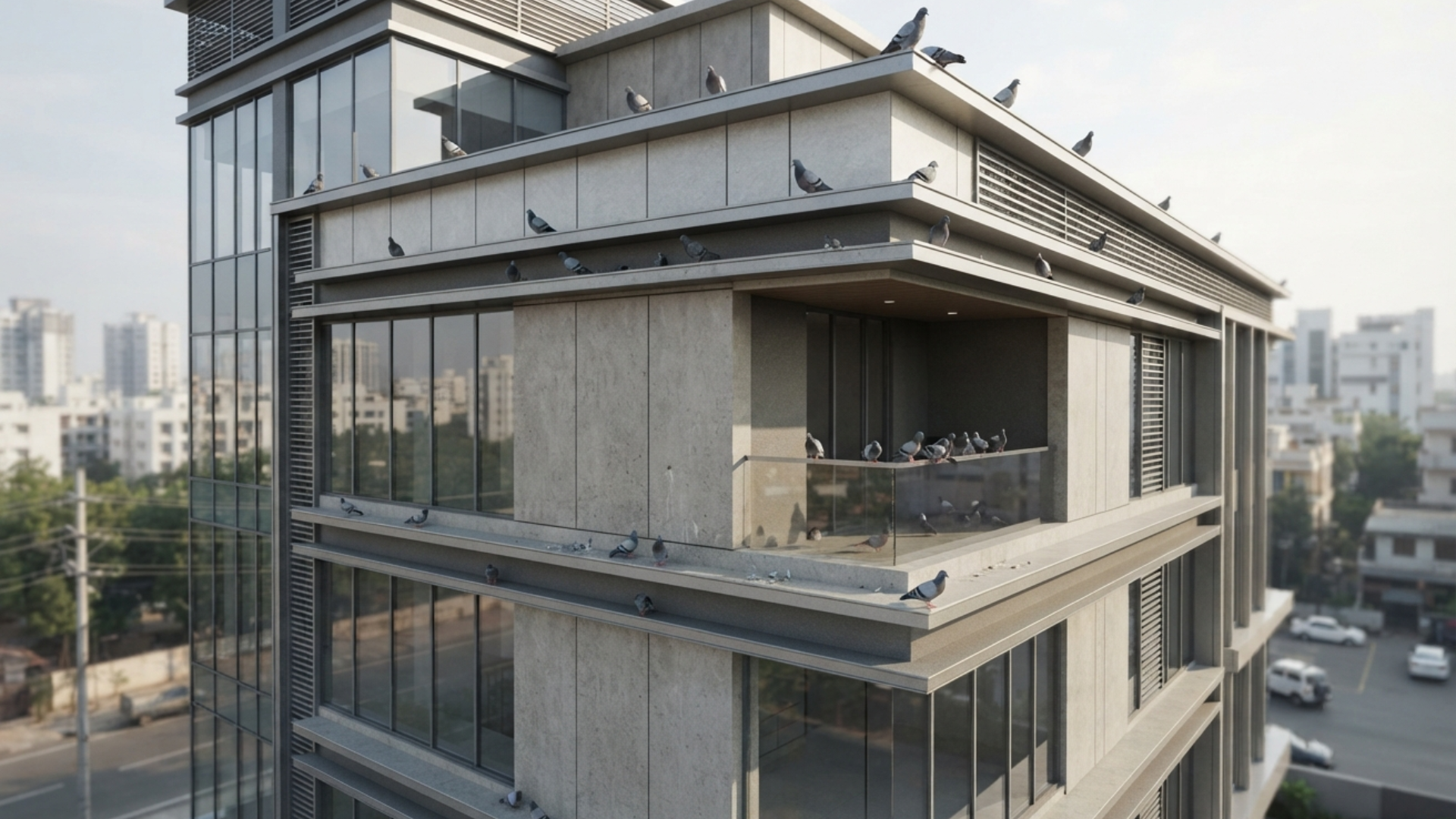
Commercial properties often provide several conditions that attract birds. Large buildings may have ledges, rooftops, balconies, signs, ducts and other sheltered spaces where birds can rest or build nests.
Easy Access to Food
Restaurants, food businesses, markets and waste-storage areas can provide accessible food sources. Improperly covered waste and food residues may encourage birds to repeatedly visit the property.
Suitable Nesting Areas
Birds can use sheltered corners, rooftop structures, ledges, ventilation areas and gaps around building exteriors for nesting.
Water Sources
Open water sources, drainage areas and water accumulation around a property can attract birds, particularly when suitable food and shelter are also available.
Protected Building Structures
Commercial buildings often have architectural features that provide convenient resting and nesting locations. Once birds become accustomed to an area, they may continue returning to the same location.
Common Bird Problems in Commercial Buildings
Bird activity can create several maintenance and hygiene concerns for commercial property owners.
Bird Droppings on Building Surfaces
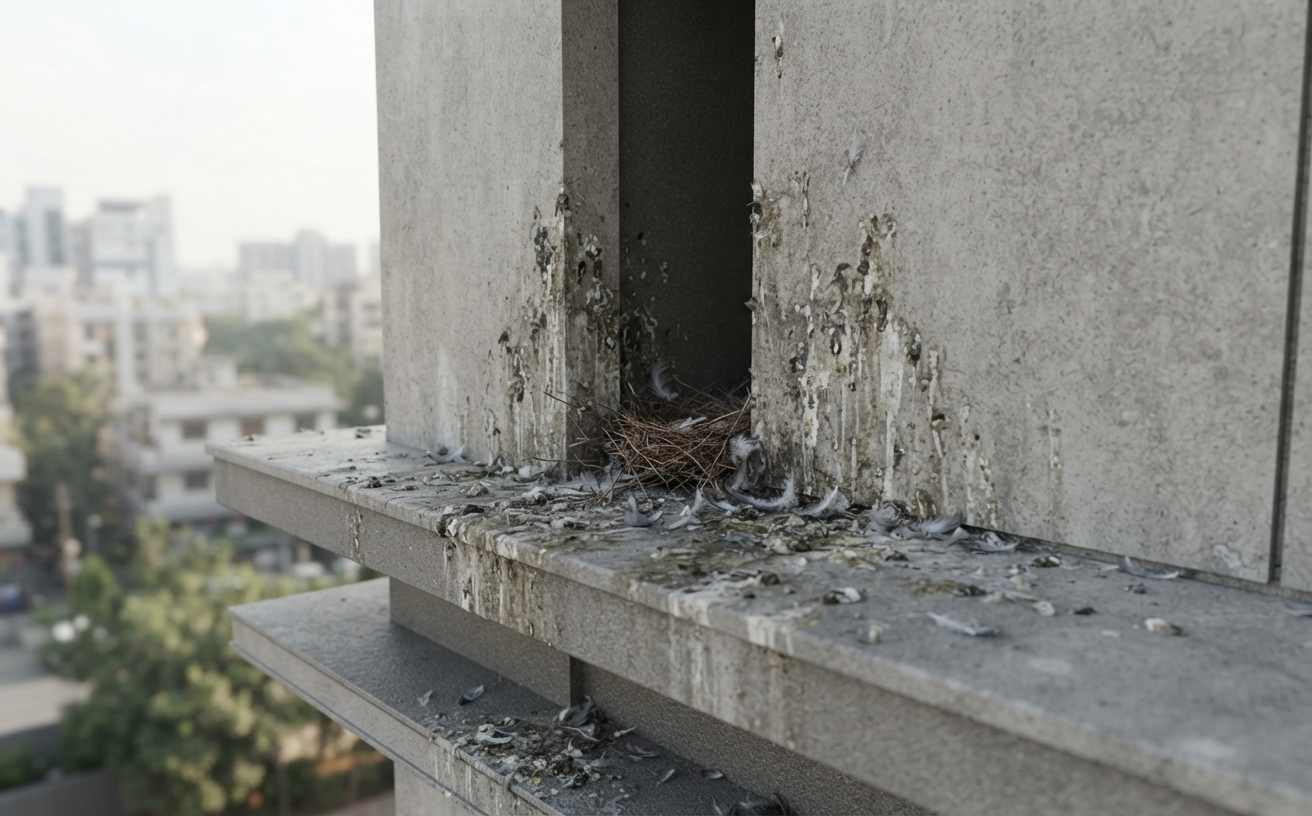
Bird droppings can accumulate on rooftops, windows, ledges, walkways, vehicles and other surfaces. Regular cleaning may become necessary when bird activity is persistent.
Nesting Materials
Birds may build nests using twigs, leaves, feathers and other materials. Nests around equipment, ducts or building openings can create additional maintenance concerns.
Feathers and Bird Debris
Repeated bird activity can leave feathers and other debris around frequently used areas. This can make entrances, balconies, rooftops and service areas difficult to maintain.
Noise and Disturbance
Large numbers of birds gathering around a commercial property can create noise, particularly near rooftops, air-conditioning units and sheltered structures.
Damage to Building Areas
Repeated nesting and bird activity can contribute to staining and deterioration of certain building surfaces. Bird nests may also interfere with access to specific maintenance areas.
What Risks Can Bird Infestations Create?
Bird problems are not only a cleanliness issue. In commercial environments, uncontrolled bird activity can affect maintenance, appearance and day-to-day operations.
Hygiene Concerns
Bird droppings and nesting debris can contaminate surfaces where regular cleaning and hygiene are important. Businesses handling food or serving customers need to pay particular attention to areas where birds are active.
Property Appearance
Accumulated droppings, feathers and nests can make a commercial property appear poorly maintained. This can be particularly noticeable around customer entrances and visible building surfaces.
Increased Cleaning Requirements
Businesses may need to spend additional time and resources cleaning areas repeatedly affected by bird activity.
Maintenance Difficulties
Birds may nest around rooftops, equipment and other difficult-to-access areas. Repeated activity can make routine inspection and maintenance more complicated.
Blocked or Affected Building Areas
Nesting materials can accumulate around selected openings and structures. Where bird activity occurs around ventilation or service areas, professional assessment may be necessary.
Where Do Birds Commonly Nest or Rest?
Identifying the areas birds use regularly is an important part of bird infestation control.
Rooftops
Flat rooftops and rooftop structures can provide open spaces for birds to land, rest and nest.
Ledges and Window Sills
Building ledges and window sills can become regular resting locations, particularly when they are sheltered from wind and rain.
Balconies
Unused balconies or service balconies may provide quiet areas where birds can establish nests.
Signboards and Building Facades
External sign structures and architectural projections can create suitable perching locations.
Air-Conditioning and Service Areas
Birds may use sheltered spaces around external equipment and service structures.
Warehouses and Industrial Buildings
Large industrial properties may have multiple access points and elevated structures where birds can enter, rest or nest.
Common Signs of Bird Infestation
Frequent Bird Activity
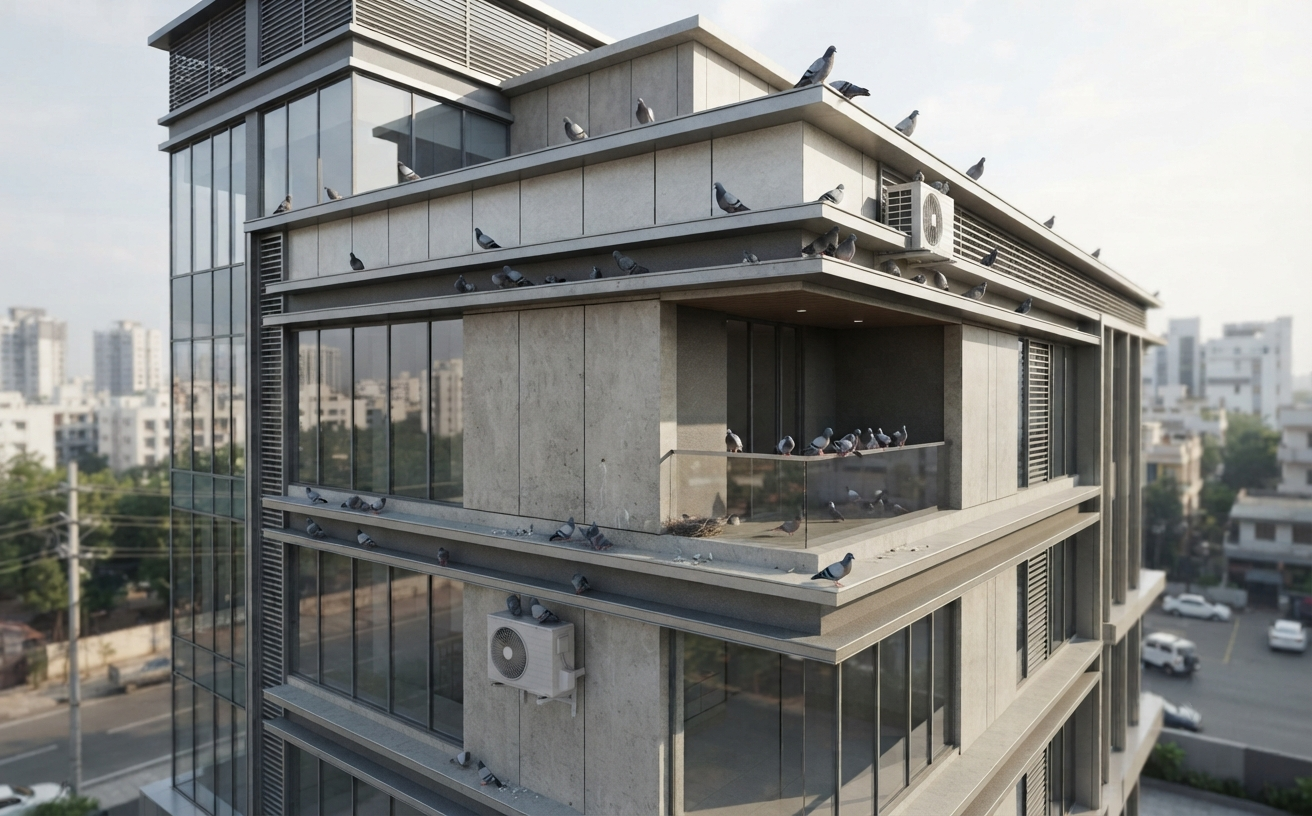
Regular sightings of pigeons or other birds around the same parts of a commercial building may indicate that the location provides suitable food, shelter or nesting conditions.
Accumulation of Bird Droppings
Repeated droppings on ledges, rooftops, windows, walkways and equipment areas can indicate ongoing bird activity.
Visible Nests
Nests around ledges, rooftops, ducts, balconies or service areas can be a clear sign that birds are using the property regularly.
Feathers and Nesting Debris
A repeated accumulation of feathers, twigs and other nesting materials can indicate an active bird location.
Repeated Bird Sounds
Frequent bird calls or movement noises from rooftops, ceiling spaces or sheltered structures may require further inspection.
Birds Returning to the Same Location
When birds repeatedly return to the same ledge, rooftop or building section, the location may be providing a reliable resting or nesting opportunity.
How Can Businesses Prevent Bird Problems?
Keep Waste Properly Covered
Use properly closed waste containers and avoid leaving food waste exposed. This can help reduce easily accessible food sources around the property.
Remove Accessible Food Sources
Food residues around restaurants, canteens, loading areas and waste-storage zones should be cleaned regularly.
Inspect Building Openings
Gaps, openings and sheltered structural areas should be inspected regularly to identify possible bird-entry points.
Maintain Rooftops
Rooftops should be kept clean and checked for areas where birds may repeatedly gather or establish nests.
Clean Affected Areas
Regular cleaning of bird droppings, feathers and nesting debris can help maintain the appearance and hygiene of commercial areas.
Monitor High-Risk Areas
Ledges, balconies, rooftops, ducts and service areas should be monitored regularly when they have a history of bird activity.
Professional Bird Control Methods for Commercial Buildings
When bird activity becomes persistent, professional bird pest control services can help identify the cause and determine an appropriate control approach.
Step 1: Site Inspection
A professional inspection helps identify where birds are gathering, nesting or entering the property.
Step 2: Identify Bird Activity
The type and pattern of bird activity can be assessed to understand which areas are being used regularly.
Step 3: Identify Attraction Points
Food sources, water, shelter and suitable nesting locations can be identified as possible reasons for recurring activity.
Step 4: Select Suitable Bird Control Measures
Depending on the property, appropriate exclusion or deterrent measures can be considered.
Step 5: Prevent Re-Entry
Potential access points can be addressed to reduce the likelihood of birds returning to the same locations.
Step 6: Follow-Up Monitoring
Follow-up inspections can help determine whether preventive measures are working and whether additional attention is required.
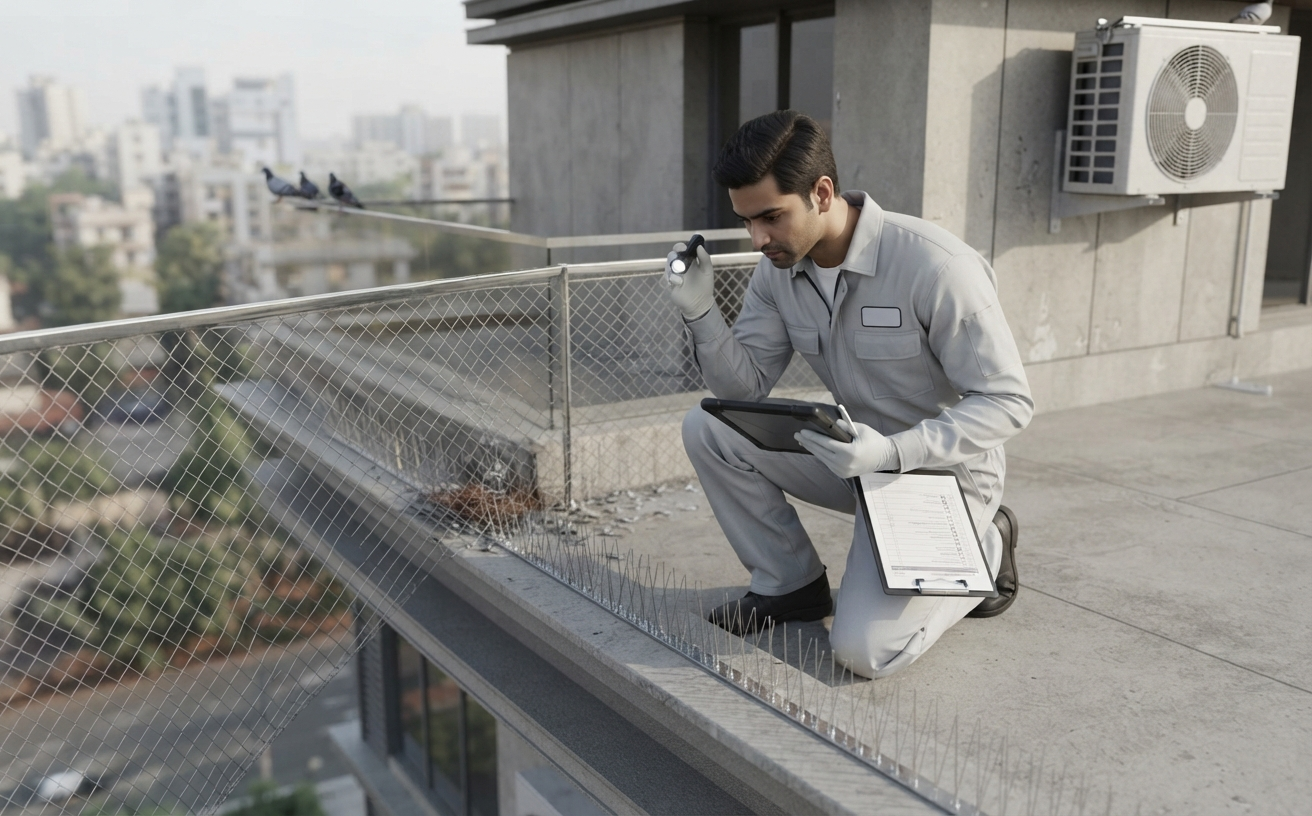
Bird Control Methods Used for Commercial Properties
Bird Netting
Bird netting can be used to restrict birds from accessing selected balconies, courtyards, service areas and other suitable spaces.
Bird Spikes
Bird spikes may be installed on appropriate ledges and surfaces to discourage birds from landing in frequently affected locations.
Physical Exclusion
Sealing suitable openings and restricting access to sheltered spaces can help reduce opportunities for birds to enter and nest.
Bird Deterrent Systems
Depending on the property and bird activity, suitable deterrent systems may be considered to discourage birds from repeatedly using specific areas.
Hygiene and Habitat Management
Reducing accessible food, maintaining waste-storage areas and cleaning affected locations can support longer-term bird control.
Bird Pest Control for Different Commercial Properties
Restaurants and Food Businesses
Restaurants and food businesses may experience bird activity around waste-storage areas, entrances, rooftops and outdoor customer spaces. Proper waste management and regular inspection can help reduce attraction points.
Offices
Office buildings may experience bird activity around balconies, rooftops, air-conditioning equipment and building ledges.
Warehouses
Warehouses often contain large open structures, loading areas and elevated spaces that can provide suitable bird access and nesting opportunities.
Factories
Industrial buildings may require attention around rooftops, machinery areas, ducts, service structures and storage zones.
Hospitals and Healthcare Buildings
Healthcare facilities require careful attention to cleanliness and building maintenance. Bird activity around entrances, rooftops, service areas and waste-management zones should be monitored and addressed appropriately.
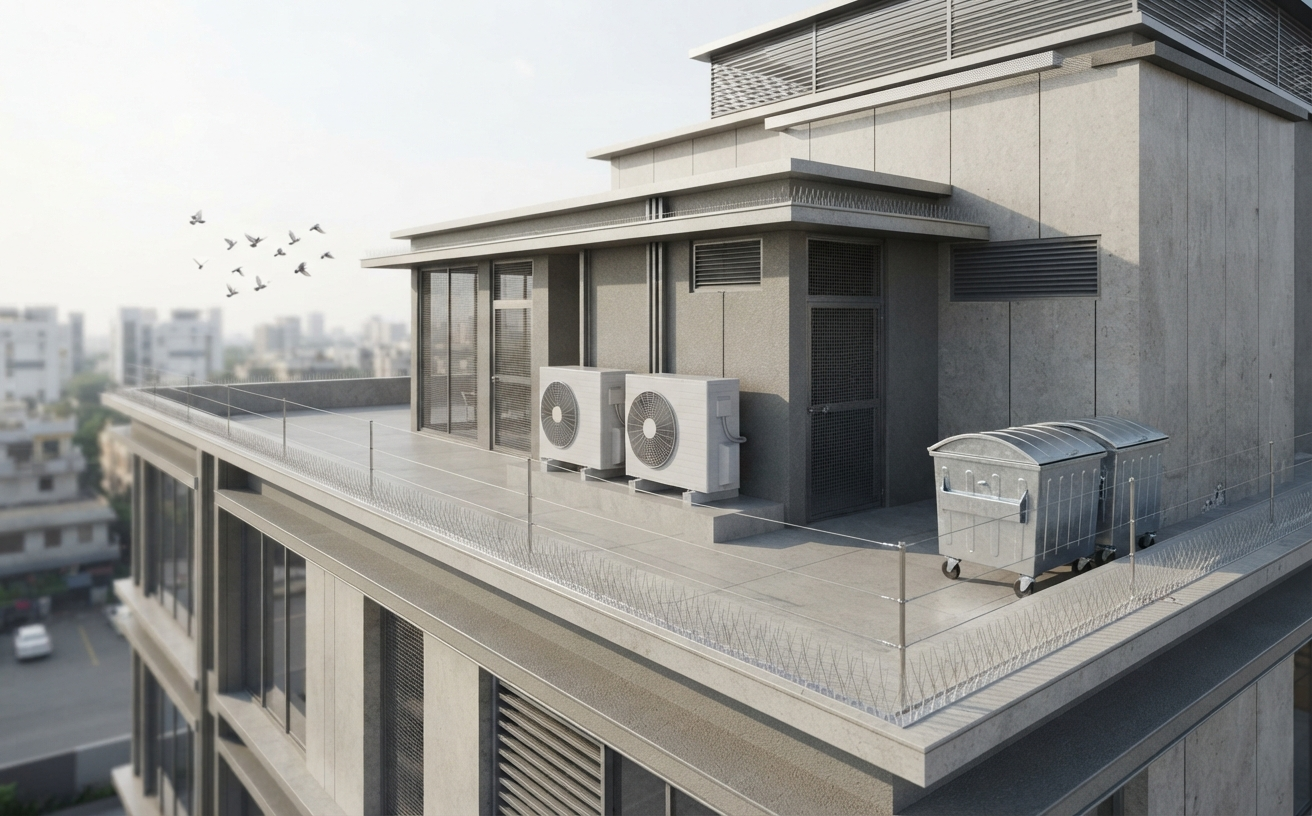
Why Regular Bird Inspections Matter
Bird activity can increase gradually. A few birds around a building may eventually become a recurring problem if nesting locations and attraction points are not addressed.
Regular inspections can help businesses:
- Identify early signs of bird activity
- Find nesting locations
- Detect potential entry points
- Monitor vulnerable building areas
- Reduce repeated cleaning requirements
- Maintain better building hygiene
- Identify areas requiring preventive bird control
For commercial properties, prevention is generally easier to manage when bird activity is identified before large nesting populations become established.
When Should a Business Contact a Professional?
A business should consider professional bird pest control when bird activity is persistent, nesting occurs repeatedly or affected areas are difficult to access safely.
Professional assistance may be useful when:
- Birds repeatedly return after being removed
- Multiple nests are present
- Bird droppings are accumulating heavily
- Birds are entering building structures
- Bird activity affects customer-facing areas
- Rooftop or service areas are difficult to access
- Regular cleaning is no longer enough
- The business needs a long-term prevention approach
Professional inspection can help determine whether the problem is related to food availability, nesting opportunities, building access or a combination of factors.
Bird Pest Control for Long-Term Prevention
Bird control should not focus only on removing birds from an affected location. Long-term prevention involves understanding why birds are attracted to the property and reducing opportunities for them to return.
A practical prevention approach may include:
- Regular property inspections
- Proper waste management
- Removal of accessible food sources
- Identification of nesting locations
- Building-entry assessment
- Suitable physical exclusion
- Appropriate bird deterrent measures
- Follow-up monitoring
Combining these measures can help commercial properties manage recurring bird activity more effectively.
FAQ
1. What is bird pest control?
Bird pest control involves identifying bird activity, nesting areas and attraction points around a property and using suitable prevention or exclusion methods to manage recurring bird problems.
2. Which birds commonly cause problems around commercial buildings?
Pigeons are commonly associated with commercial building bird problems, while sparrows, mynas and other birds may also use suitable building structures for resting or nesting.
3. How can I prevent pigeons from nesting on my building?
Reducing food and water access, inspecting building openings and using suitable physical exclusion or deterrent measures can help discourage pigeons from nesting.
4. Are bird droppings a serious commercial property concern?
Bird droppings can create hygiene, cleaning and maintenance concerns, particularly in areas that are frequently used by employees, customers or visitors.
5. Can bird netting prevent birds from entering certain areas?
Bird netting can be used in suitable locations to restrict bird access to selected spaces such as balconies, courtyards and service areas.
6. How often should commercial buildings be inspected for bird activity?
Inspection frequency depends on the building, location and history of bird activity. Properties with recurring problems may benefit from regular monitoring.
7. Is removing a bird nest enough to solve the problem?
Removing a nest may not address the reason birds are repeatedly returning. Identifying access points, food sources, shelter and suitable nesting locations is important for longer-term prevention.
8. Does professional bird control work for warehouses and factories?
Professional bird control can be considered for warehouses, factories and other commercial properties where birds repeatedly gather, nest or enter building structures.
Conclusion
Bird activity can become a recurring maintenance and hygiene concern for commercial buildings when birds have easy access to food, water, shelter and nesting locations. Droppings, nests, feathers and repeated bird activity can affect building cleanliness and day-to-day property management. Effective bird pest control involves more than simply removing birds. Identifying attraction points, reducing access to nesting areas, maintaining proper waste management and using suitable preventive measures can help businesses manage bird problems more effectively. If your commercial property is experiencing repeated bird activity, professional inspection can help identify the problem areas and determine a suitable bird control approach. Looking for professional bird pest control? Contact HVL Pest Services to discuss your commercial pest-control requirements and arrange an inspection.