
Introduction
The monsoon season brings much-needed rain, but it can also create ideal conditions for many household and commercial pests. Increased moisture, stagnant water, humidity, and overflowing drains can provide pests with food, shelter, and breeding areas.
During the rainy season, homeowners may notice increased activity from mosquitoes, cockroaches, ants, termites, flies, and rodents. Taking preventive measures before and during the monsoon can help reduce pest problems and protect your property.
Understanding how rain and moisture affect pest activity is essential for maintaining a clean and pest-free environment.
Why Do Pests Increase During the Monsoon?
Rainy weather can change the environment around your property and create favorable conditions for pests.
Common factors include:
- Increased moisture
- Stagnant water
- Blocked drains
- Damp walls and furniture
- Increased humidity
- Overflowing garbage
- Water accumulation around foundations
- Pest movement from flooded outdoor areas
These conditions can encourage pests to move indoors in search of food, shelter, and safer places to reproduce.
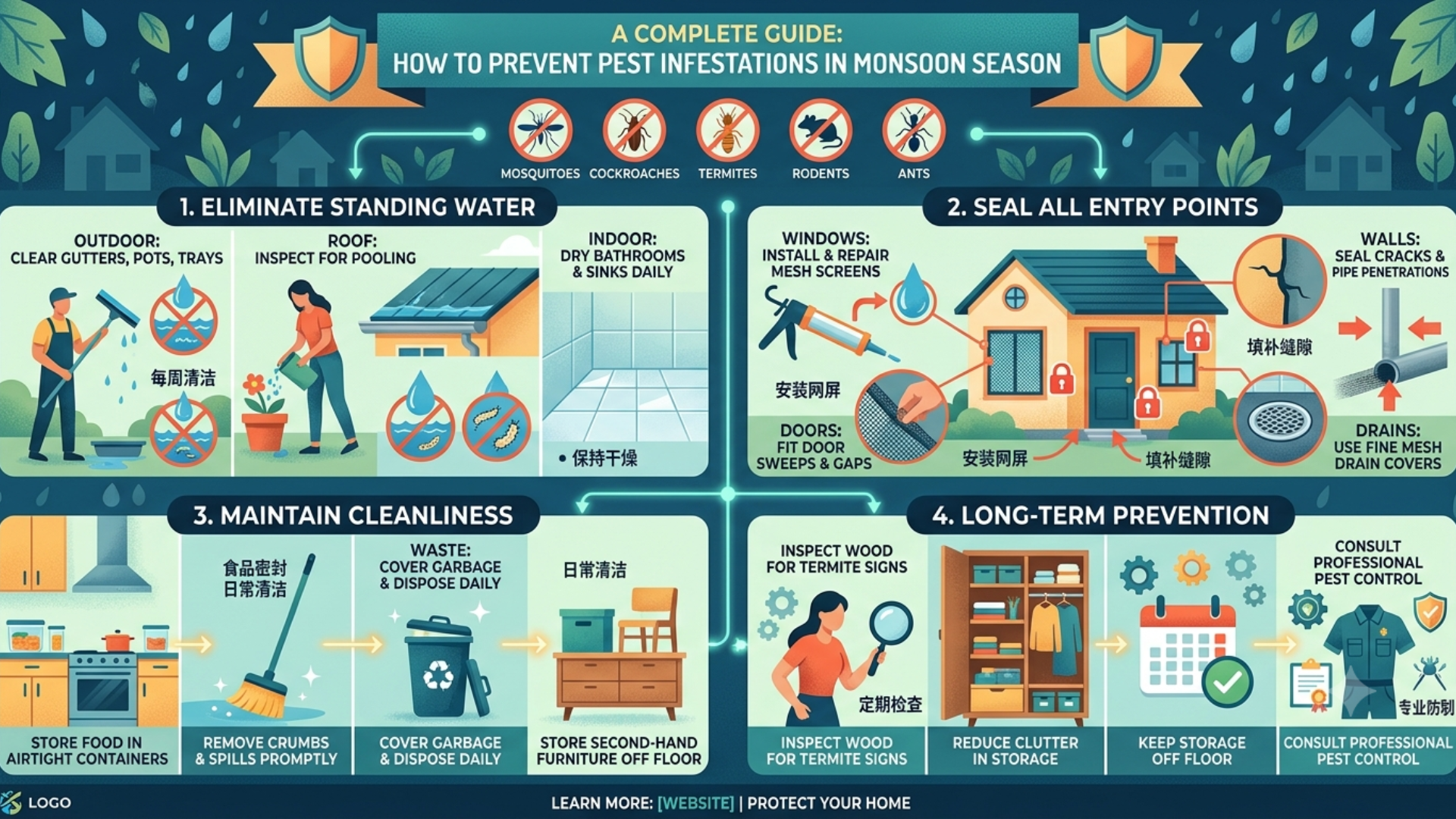
1. Remove Stagnant Water
Standing water is one of the biggest concerns during the monsoon season.
Check regularly for water in:
- Buckets
- Plant pots
- Old tyres
- Plastic containers
- Water tanks
- Outdoor drains
Remove unnecessary water and keep storage containers properly covered.
2. Keep Drains Clean
Heavy rainfall can cause drains to become blocked with leaves, mud, and other debris.
Blocked drains can attract:
- Mosquitoes
- Cockroaches
- Flies
- Other insects
Clean drains regularly and make sure water can flow away from the property.
3. Prevent Water Leakage
Rainwater and plumbing leaks can create damp conditions inside your home.
Check:
- Roofs
- Walls
- Windows
- Pipes
- Bathroom areas
- Kitchen sinks
Repair leaks quickly to prevent excessive moisture and dampness.
4. Keep Your Home Dry
Pests such as cockroaches and termites are often attracted to damp areas.
Pay attention to:
- Under sinks
- Bathrooms
- Storage rooms
- Basements
- Areas near leaking pipes
Improve ventilation and dry wet areas whenever possible.
5. Protect Your Home from Termites
Monsoon moisture can increase termite activity around properties.
Inspect:
- Wooden doors
- Window frames
- Furniture
- Cupboards
- Wooden flooring
- Areas near foundations
Look for mud tubes, hollow-sounding wood, small holes, or other signs of termite activity.
6. Keep Food Properly Stored
Rainy weather does not reduce the need for proper food hygiene.
Always:
- Store food in airtight containers
- Keep fruits and vegetables protected
- Clean food spills immediately
- Avoid leaving food uncovered
- Clean kitchen surfaces regularly
Proper food storage helps reduce cockroach, ant, and rodent activity.
7. Manage Garbage Properly
Wet garbage can become an ideal environment for flies and other pests.
Make sure:
- Garbage bins remain covered
- Food waste is removed regularly
- Waste areas are kept dry
- Garbage is not allowed to accumulate
Proper waste management can significantly reduce pest attraction.
8. Keep Windows and Doors Protected
During heavy rains, people may keep windows and doors open for ventilation. This can allow insects to enter the property.
Consider using:
- Window screens
- Door screens
- Properly sealed windows
- Suitable barriers around entry points
Inspect screens regularly for holes and damage.
9. Maintain Outdoor Areas
The area around your property can influence indoor pest activity.
Keep outdoor spaces free from:
- Fallen leaves
- Wood debris
- Standing water
- Open garbage
- Overgrown vegetation
- Unused containers
A clean exterior reduces potential pest breeding and hiding areas.
Common Pests During the Monsoon
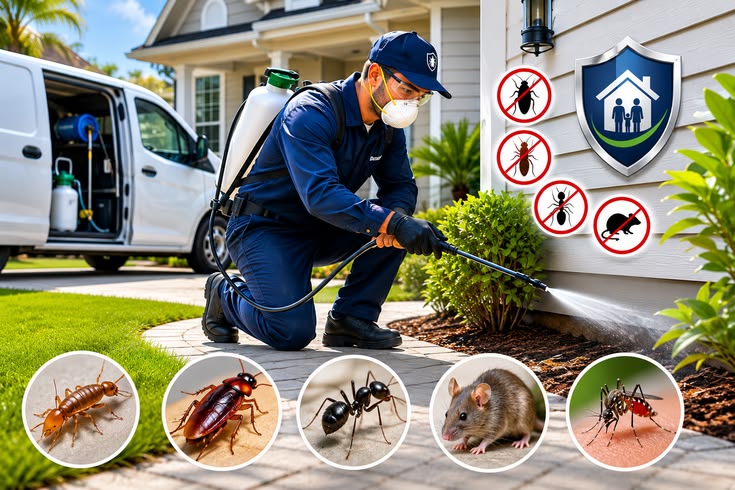
Several pests may become more active during rainy weather.
Common examples include:
- Mosquitoes – Increased stagnant water creates breeding opportunities.
- Cockroaches – Moist drains and damp areas can attract them.
- Termites – Moisture can increase activity around vulnerable wooden structures.
- Ants – Heavy rain may drive colonies toward dry indoor areas.
- Flies – Wet waste and organic material can create breeding conditions.
- Rodents – Flooded outdoor areas can encourage rodents to seek shelter indoors.
Understanding seasonal pest behavior can help homeowners take preventive action early.
Signs of Monsoon-Related Pest Activity
Watch for:
- Increased mosquito activity
- Ant trails inside rooms
- Cockroaches near drains
- Termite mud tubes
- Flies around garbage
- Rodent droppings
- Unusual pest activity after heavy rainfall
If pest activity continues despite preventive measures, professional inspection may be required.
Why Professional Pest Control Is Important During Monsoon
Basic cleaning and prevention can reduce pest activity, but heavy rainfall can create conditions that are difficult for homeowners to manage alone.
Professional pest control can provide:
- Detailed property inspection
- Identification of breeding areas
- Targeted pest treatment
- Moisture and entry-point assessment
- Preventive recommendations
- Regular monitoring
Early professional treatment can help prevent seasonal pest activity from developing into a major infestation.
How HVL Pest Services Can Help
HVL Pest Services provides professional pest management solutions for homes and commercial properties during the monsoon season.
Their approach includes:
Detailed Inspection
Professionals inspect the property for pest activity, stagnant water, moisture sources, entry points, and potential breeding areas.
Targeted Treatment
Treatment methods are selected according to the type of pest and the affected areas.
Preventive Protection
Experts provide practical recommendations for moisture control, sanitation, drainage, and pest prevention.
Regular Monitoring
Periodic inspections can help identify recurring pest activity and maintain better protection throughout the rainy season.
Conclusion
The monsoon season can create favorable conditions for mosquitoes, cockroaches, termites, ants, flies, and rodents. Stagnant water, blocked drains, damp areas, food waste, and poor drainage can all increase pest activity around your property.
Removing standing water, maintaining drains, fixing leaks, storing food properly, managing garbage, and keeping outdoor areas clean can significantly reduce the risk of infestation.
If pest activity increases during the rainy season, professional pest control can help identify hidden breeding areas and provide targeted treatment. Taking preventive action early can help keep your home or business clean, comfortable, and protected throughout the monsoon season.