[FEATURED IMAGE – IMAGE 1]
Image Prompt:
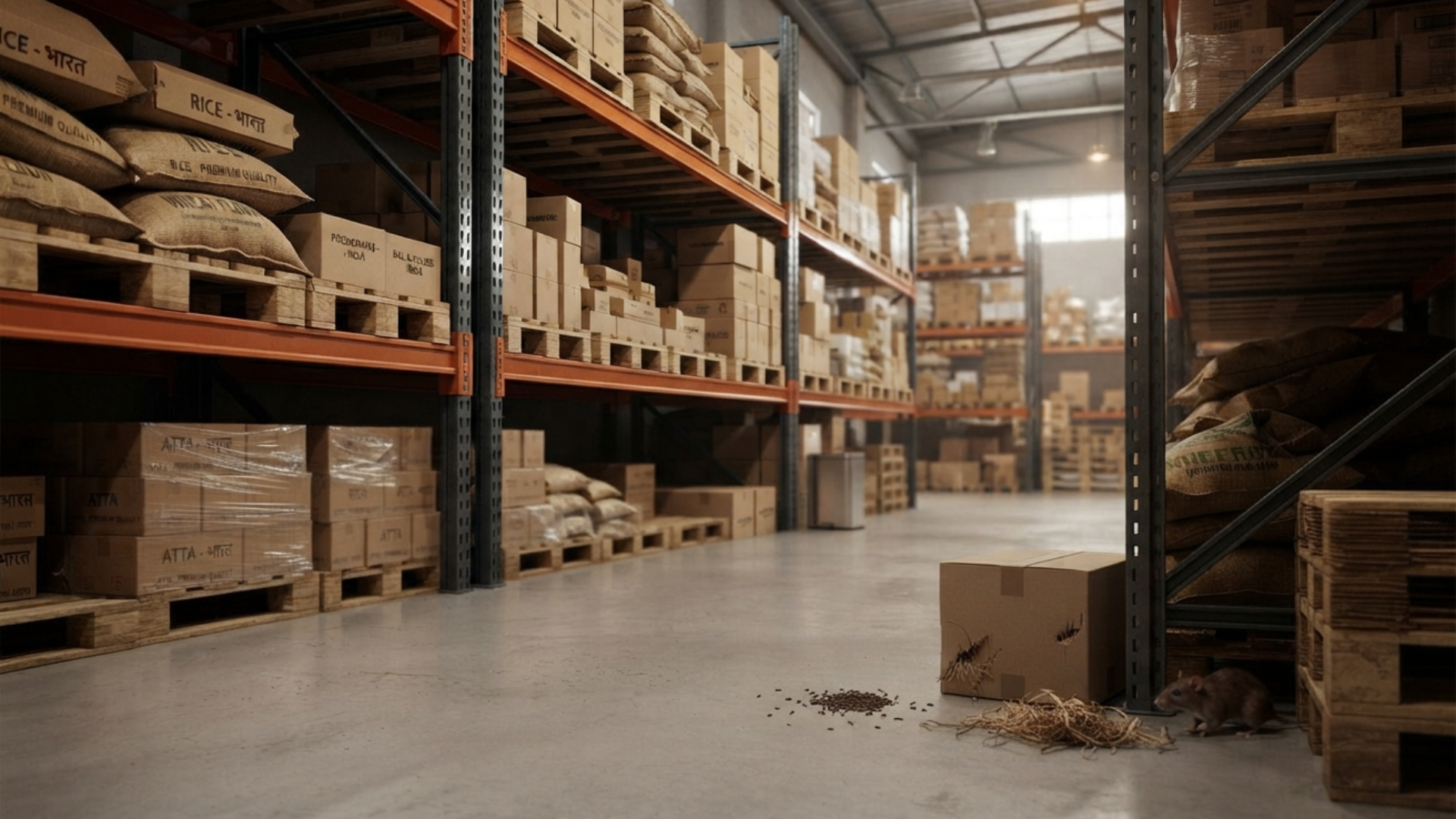
Create a premium photorealistic commercial warehouse interior in India, large modern food storage warehouse with neatly arranged food cartons and packaged goods on tall metal storage racks, a realistic brown rat subtly visible near the bottom corner of the warehouse floor, small signs of rodent risk such as slightly damaged cardboard packaging and tiny scattered droppings kept subtle and realistic, clean industrial environment, dramatic but natural warehouse lighting, cinematic depth of field, realistic textures, professional commercial photography, visually striking SEO blog featured image, sophisticated composition, no people, no text, no logo, no watermark, landscape 16:10 composition, 1200×750 pixels.
Introduction
Rodent infestations can become a serious problem in food warehouses and storage facilities, where large quantities of food products, packaging materials and inventory are stored. Rats and mice can enter through small gaps, contaminate stored products and create hygiene and operational concerns.
Effective rodent control in warehouses is not only about removing rodents after an infestation occurs. It also involves identifying entry points, maintaining proper storage practices, keeping the facility clean and conducting regular inspections.
This guide explains the common causes of warehouse rodent infestations, warning signs to look for and practical ways businesses can prevent rodent problems.
Why Are Warehouses Attractive to Rodents?
Warehouses can provide rodents with three things they need to survive: food, water and shelter. Food storage facilities can be particularly attractive because products may remain stored for long periods.
Easy Access to Food
Food grains, packaged products, ingredients and other stored materials can provide an accessible food source if they are not properly protected.
Even damaged packaging or small food spills can attract rodents and encourage them to remain inside the facility.
Shelter and Hiding Areas
Large warehouses often contain racks, pallets, cartons and storage equipment that can provide hiding places for rats and mice.
Rodents may build nests in quiet, undisturbed areas where they are less likely to be noticed.
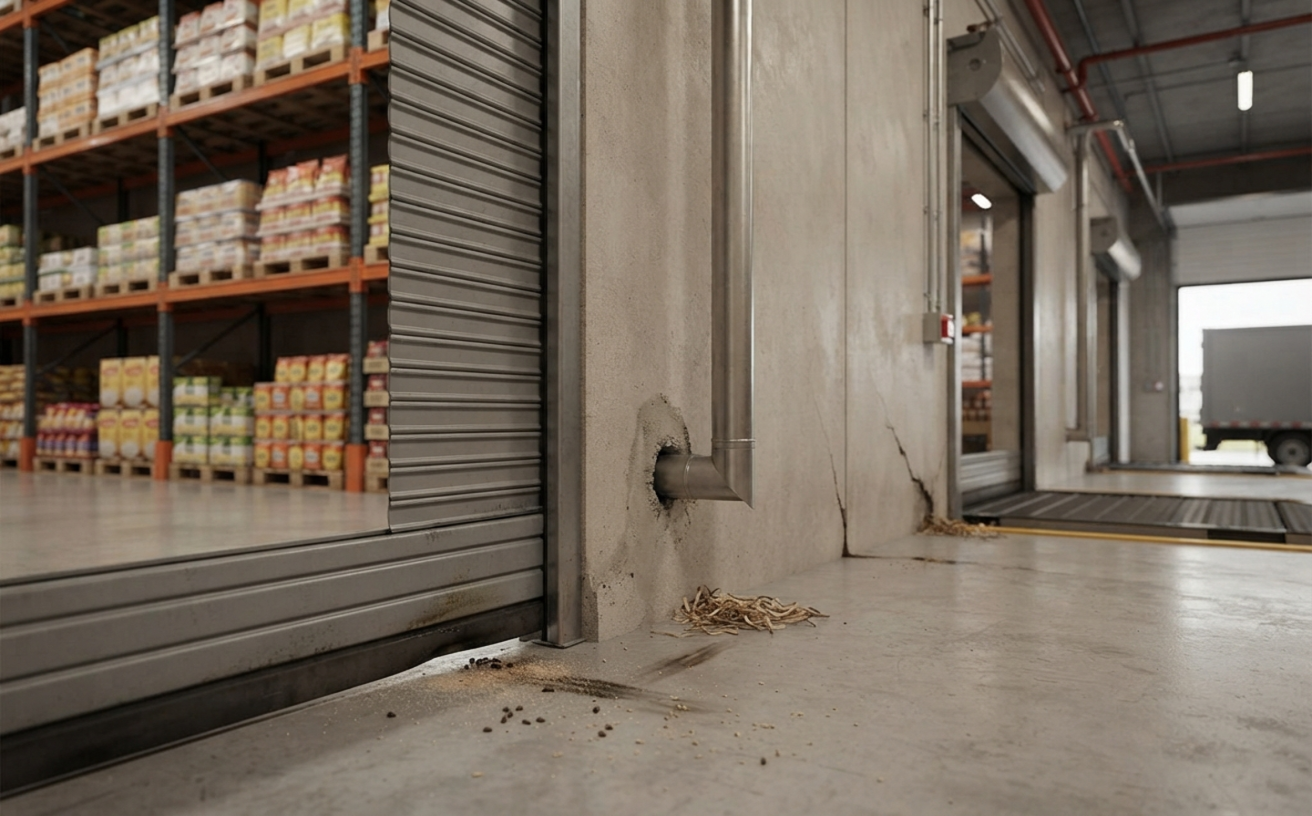
Small Entry Gaps
Rats and mice can enter buildings through surprisingly small openings. Gaps around doors, pipes, drains, walls and utility lines can become potential entry points.
Once inside, rodents can move between storage areas, walls and other concealed spaces.
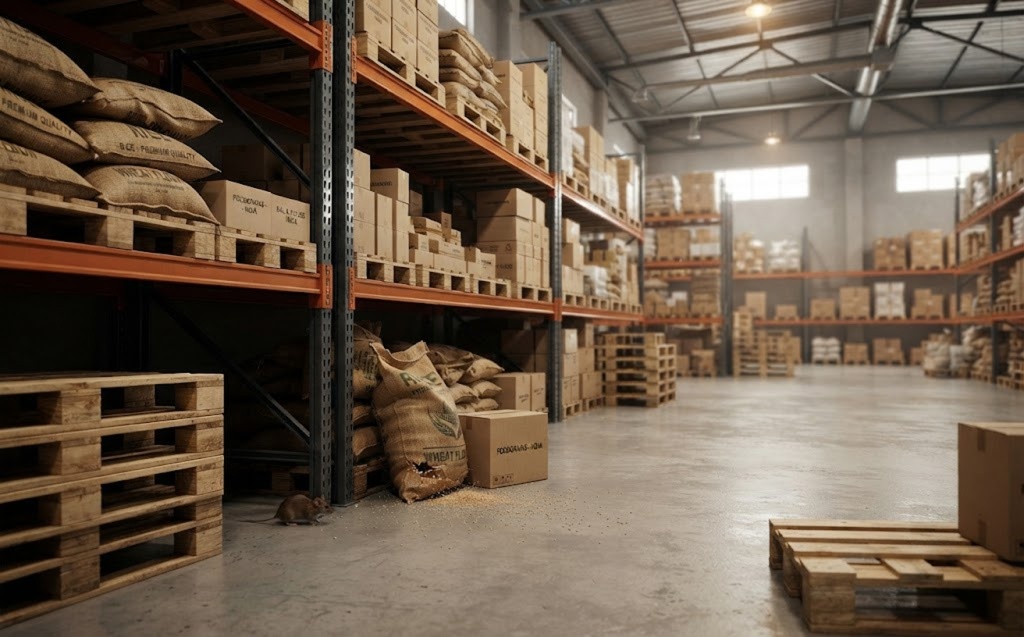
Common Signs of Rodent Infestation in Warehouses
Identifying rodent activity early can help businesses address the problem before it becomes more difficult to control.
1. Rodent Droppings
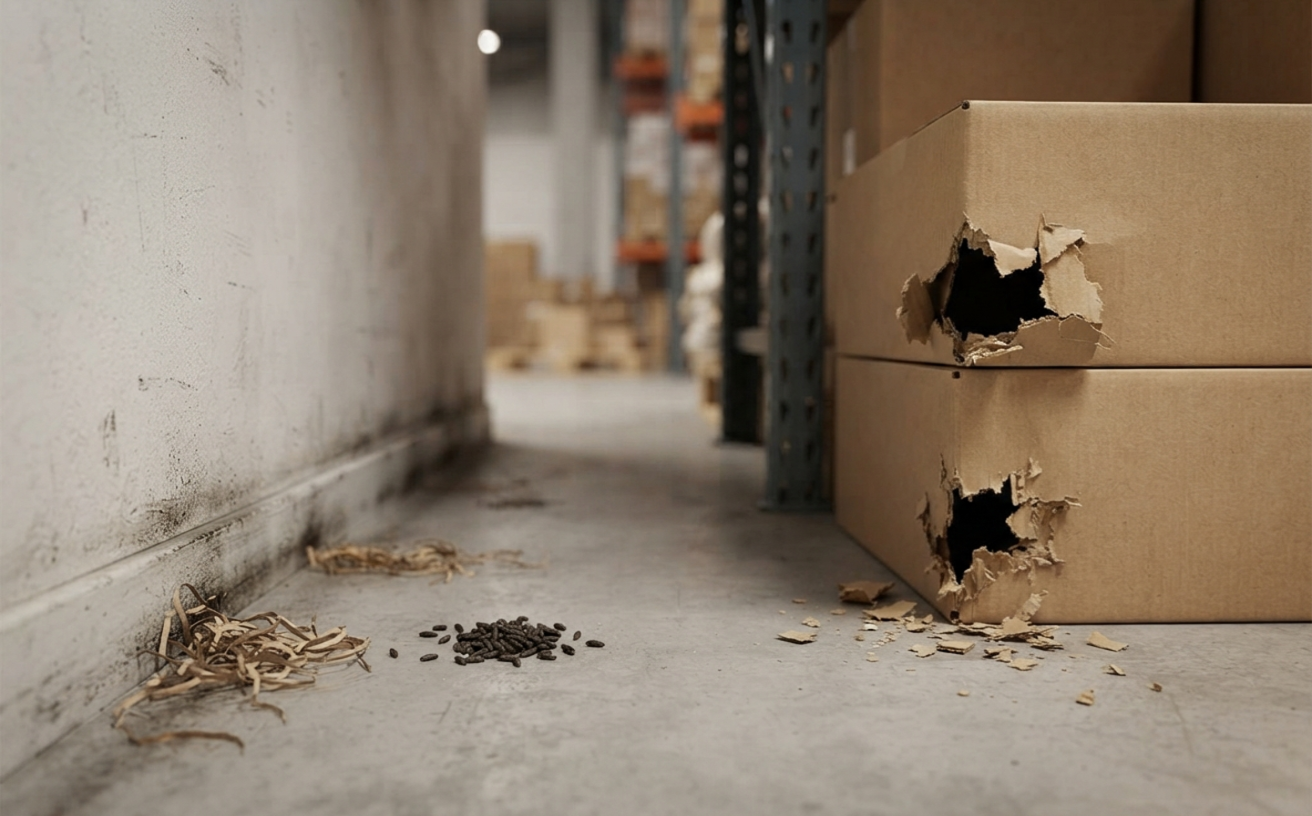
Small dark droppings around storage areas, racks, corners and along walls can indicate rodent activity.
Fresh droppings may suggest that rodents are actively using the area.
2. Gnaw Marks
Rats and mice naturally gnaw on different materials. Damaged cartons, wooden pallets, plastic packaging and electrical cables can sometimes indicate rodent activity.
3. Damaged Food Packaging
Holes, bite marks or torn packaging around stored food products should be investigated.
Even when the product itself does not appear visibly damaged, packaging damage can indicate that rodents have been accessing the storage area.
4. Unusual Odours
A persistent unpleasant smell in specific areas of a warehouse can sometimes be associated with rodent activity, particularly when rodents are nesting or moving through enclosed spaces.
5. Nesting Materials
Shredded paper, cardboard, insulation or other soft materials may be collected by rodents to create nests.
Finding such materials in hidden areas can be a warning sign.
6. Adult Insects Near Wooden Materials
Rodent activity is not indicated by insects. However, other pest activity around stored materials can sometimes occur at the same time, so unusual pest sightings should also be investigated during warehouse inspections.
7. Scratching or Movement Sounds
Scratching, gnawing or movement sounds from ceilings, walls, storage areas or other concealed spaces may indicate rodent activity.
How Rodents Can Affect Stored Products
Rodents can create several problems in food warehouses and storage facilities.
Product Contamination
Rodents can contaminate products and surrounding surfaces through droppings, urine, hair and contact with contaminated areas.
For businesses handling food products, maintaining clean and hygienic storage conditions is especially important.
Packaging Damage
Gnawing can damage cartons, plastic packaging and other storage materials. This can result in product loss and additional handling requirements.
Electrical and Equipment Damage
Rodents may chew electrical cables and other materials. This can create maintenance concerns and potentially affect warehouse operations.
Inventory Loss
Products affected by contamination or damaged packaging may need to be separated, inspected or discarded depending on the situation.
This makes early warehouse rodent control an important part of protecting stored inventory.
Common Rodent Entry Points in Warehouses
Before implementing a prevention program, businesses should identify how rodents may be entering the facility.
Common entry points include:
- Gaps beneath warehouse doors
- Damaged doors and door seals
- Open windows or ventilation openings
- Cracks in walls and flooring
- Openings around pipes and utility lines
- Drainage areas
- Gaps around loading bays
- Damaged roofing or wall sections
- Openings around electrical installations
- Spaces between walls and structural components
Regular inspection of these areas can help identify potential vulnerabilities.
10 Ways to Prevent Rodents in Warehouses
Preventing rodents requires a combination of sanitation, exclusion, storage management and professional monitoring.
1. Seal Structural Gaps
Inspect walls, doors, floors and utility openings for gaps or cracks.
Potential entry points should be properly sealed using suitable materials to reduce opportunities for rodents to enter.
2. Keep Warehouse Doors Closed
Loading and unloading areas can become common access points when doors remain open for extended periods.
Where possible, warehouse doors should remain closed when they are not actively being used.
3. Store Food Products Properly
Food products should be stored in appropriate packaging and containers.
Avoid leaving food materials exposed or placing them directly on the floor.
Proper storage can reduce access to food and make rodent activity easier to identify.
4. Maintain Clean Storage Areas
Food spills, broken packaging and accumulated waste can attract rodents.
Warehouse cleaning routines should include storage aisles, corners, loading areas and spaces underneath equipment.
5. Manage Waste Properly
Waste should be collected and removed regularly.
Garbage containers should be kept properly closed, and waste accumulation near storage areas should be avoided.
[IMAGE 5 – PLACE HERE]
Image Prompt:
Create a premium photorealistic commercial warehouse showing effective rodent prevention practices, clean organized food storage racks, sealed food cartons, closed waste bins, clean floor, properly maintained roller shutter doors, sufficient clearance around storage racks and walls, no food waste on the floor, professional hygiene-focused environment, modern Indian warehouse setting, bright natural industrial lighting, cinematic depth, realistic textures, polished corporate photography, no rodents visible, no people, no text, no logo, no watermark, landscape 16:10.
6. Rodent Tracks or Footprints
Disorganised storage can create additional hiding spaces for rodents. Maintain sufficient space around storage areas where possible so that employees can inspect walls, corners and floors easily.
7. Inspect Incoming Goods
Rodents or signs of rodent activity can sometimes be introduced through incoming materials, packaging or shipments. Businesses should inspect incoming goods and packaging for signs of damage or contamination before moving them into long-term storage.
8. Reduce Water Sources
Leaks, standing water and moisture around the warehouse can provide rodents with access to water. Repair leaking pipes, taps and drainage problems as soon as possible.
9. Conduct Regular Inspections
A warehouse should not only be inspected when a rodent problem becomes obvious. Routine inspections can help identify droppings, damaged packaging, entry points and other early warning signs.
10. Use Professional Rodent Control
For commercial facilities, professional pest management can provide structured inspection, monitoring and control measures based on the site’s requirements. Professional rodent control in warehouses can be particularly useful when there is repeated activity or when the facility stores food products.
Importance of Proper Food Storage
Food storage practices play an important role in rodent prevention.
Protect Food From Exposure
Food materials should remain properly sealed and protected from unnecessary exposure.
Damaged packages should be identified and handled promptly.
Maintain Suitable Storage Clearance
Avoid creating inaccessible spaces where possible. Proper clearance around walls and storage structures can make inspection and cleaning easier.
Follow Stock Rotation Practices
Organised inventory management can help prevent products from remaining untouched for long periods.
Regularly checking stored products also provides opportunities to identify packaging damage or signs of pest activity.
Warehouse Cleaning and Waste Management
Good sanitation does not replace professional pest control, but it can significantly support a rodent prevention program.
Warehouses should maintain regular cleaning schedules covering:
- Storage aisles
- Loading and unloading areas
- Corners and wall edges
- Areas around machinery
- Waste collection points
- Spaces beneath storage structures
- Employee food or break areas
Food residues and waste should be removed promptly rather than being allowed to accumulate.
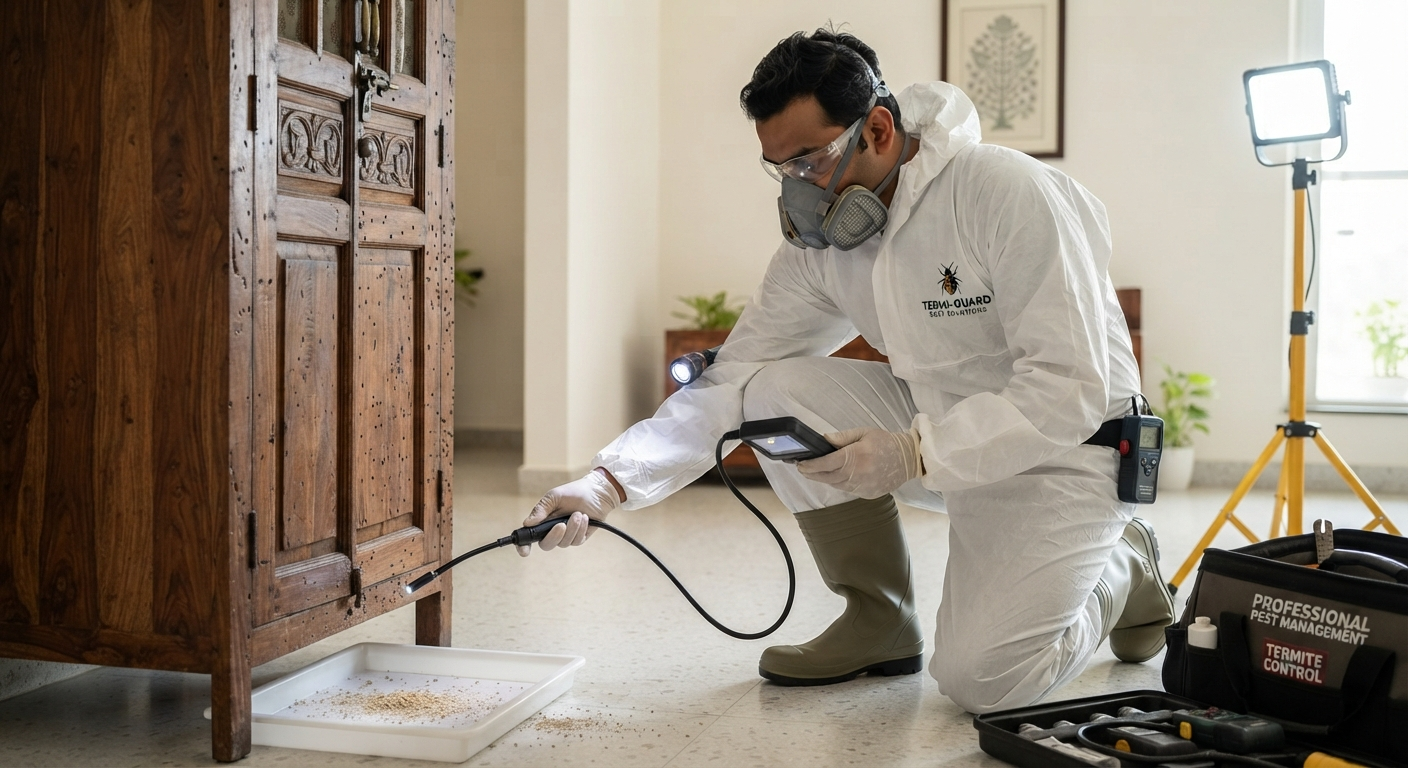
Why Regular Pest Inspections Matter
Rodent activity may not always be visible during normal warehouse operations.
Rodents can remain inside wall cavities, ceilings, storage areas or other concealed locations. By the time employees notice significant damage, the infestation may already have developed.
Regular inspections can help businesses:
- Detect early signs of activity
- Identify possible entry points
- Check vulnerable storage areas
- Monitor recurring activity
- Protect stored inventory
- Improve overall pest-prevention practices
A planned inspection schedule can therefore be more effective than waiting until a serious infestation occurs.
Professional Rodent Control for Warehouses
Commercial warehouses may require a different approach to pest management compared with residential properties.
A professional pest-control team can assess the warehouse layout, storage practices, sanitation conditions and potential entry points before recommending suitable control measures.
Step 1: Site Inspection
The pest-control team examines storage areas, loading bays, walls, doors, drainage points and other potential risk areas.
Step 2: Identify Rodent Activity
Signs such as droppings, gnaw marks, nesting materials and damaged packaging can help determine the extent and location of activity.
Step 3: Identify Entry Points
Potential access points are assessed so that businesses can take suitable exclusion and maintenance measures.
Step 4: Develop a Control Plan
The control approach can be planned according to the warehouse layout, type of stored materials, level of activity and operational requirements.
Step 5: Monitoring and Follow-Up
Regular monitoring can help determine whether rodent activity is reducing and whether additional preventive measures are required.
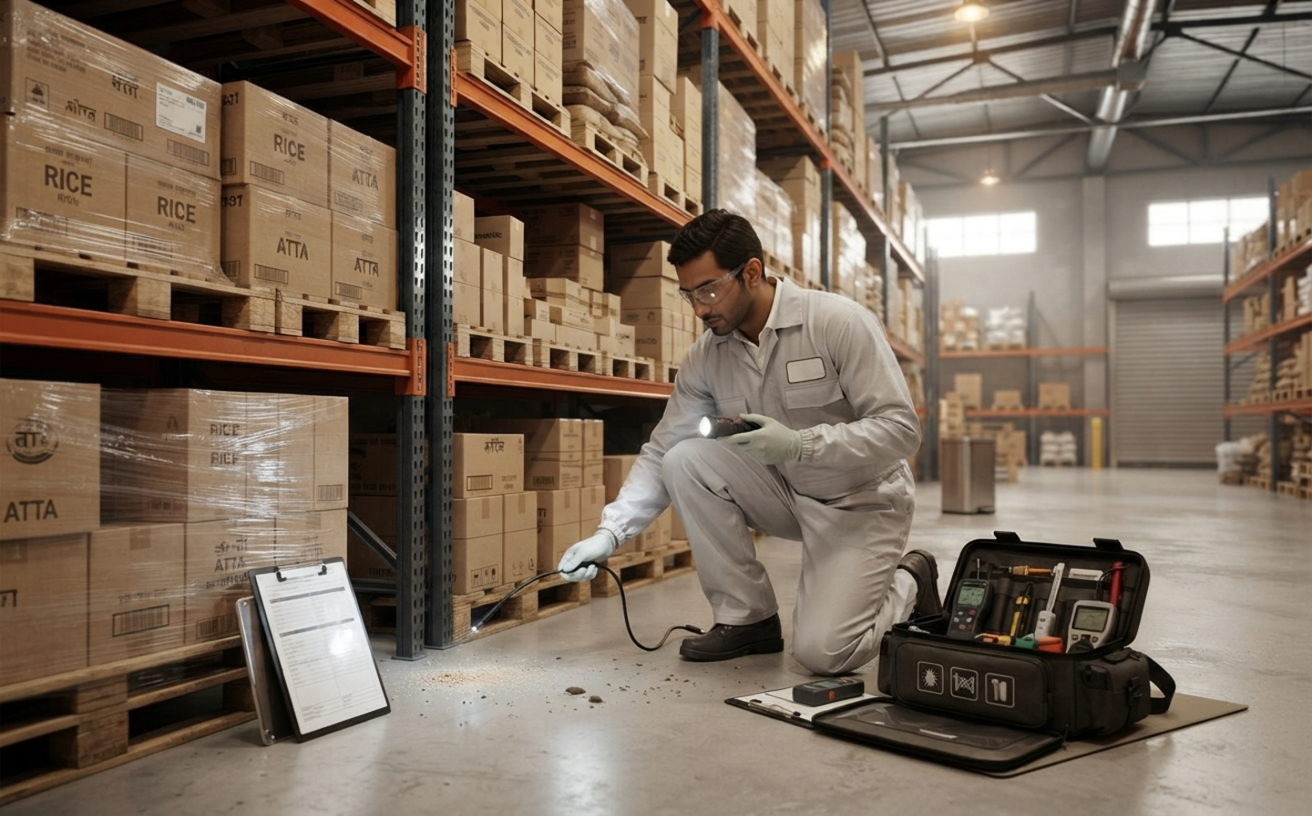
Rodent Control for Food Businesses and Storage Facilities
Food warehouses, distribution centres, grocery storage facilities and other commercial storage locations need to maintain careful pest-prevention practices because their stored products can be vulnerable to contamination and packaging damage.
A suitable pest control for storage facilities program should consider more than just removing visible rats or mice.
It should also focus on:
- Rodent entry prevention
- Sanitation
- Storage practices
- Monitoring
- Inspection
- Structural maintenance
- Employee awareness
- Follow-up control measures
This approach helps businesses address the conditions that can contribute to recurring rodent activity.
When Should You Contact a Professional?
Businesses should consider professional assistance when they notice recurring or multiple signs of rodent activity.
Professional inspection may be appropriate when:
- Rodent droppings are repeatedly found
- Food packaging is being damaged
- Gnaw marks are increasing
- Rodents are seen during working hours
- Scratching sounds are heard from concealed areas
- Rodent activity continues despite cleaning
- The facility handles food or sensitive inventory
- New entry points are difficult to identify
- Previous control measures have not solved the problem
Early intervention can help businesses investigate the source of the problem before rodent activity becomes more difficult to manage.
Frequently Asked Questions
How do I know if my warehouse has a rodent infestation?
Common warning signs include droppings, gnaw marks, damaged packaging, nesting materials, unusual odours and scratching sounds. Repeated signs in multiple areas may indicate ongoing rodent activity.
Why do rodents enter food warehouses?
Food warehouses can provide access to food, water and shelter. Openings around doors, walls, pipes and loading areas can also provide entry routes.
How can I prevent rats in a warehouse?
Businesses can reduce rodent risks by sealing entry points, maintaining clean storage areas, managing waste properly, protecting food products, keeping doors closed when not in use and conducting regular pest inspections.
Is warehouse cleaning enough to control rodents?
Cleaning is an important preventive measure, but it may not be enough if rodents are already entering or nesting inside the facility. Professional inspection may be required to identify entry points and active infestation areas.
Can rodents damage electrical cables?
Yes. Rodents may gnaw on electrical cables and other materials. Any suspected cable damage should be inspected and addressed by the appropriate qualified professional.
How often should a warehouse have pest inspections?
The appropriate inspection frequency depends on the type of facility, stored products, building conditions and pest risk. A professional pest-control provider can help determine a suitable inspection and monitoring schedule.
Is professional rodent control necessary for food storage facilities?
Professional control can be particularly useful for food storage facilities because rodent activity can affect stored products, packaging and hygiene conditions. A professional program can combine inspection, monitoring, control and preventive recommendations.
Conclusion
Rodent problems in food warehouses and storage facilities can affect stored products, packaging, hygiene and daily operations. Preventing these problems requires more than reacting when a rat or mouse is seen. Sealing potential entry points, maintaining clean storage areas, managing waste, protecting food products and conducting regular inspections can all help reduce the risk of rodent activity. If your warehouse is showing signs of rodent activity or you need a structured rodent control in warehouses solution, professional pest-control support can help identify the source of the problem and develop an appropriate control plan. Looking for professional warehouse rodent control? Contact HVL Pest Services to discuss your commercial pest-control requirements and arrange an inspection.